
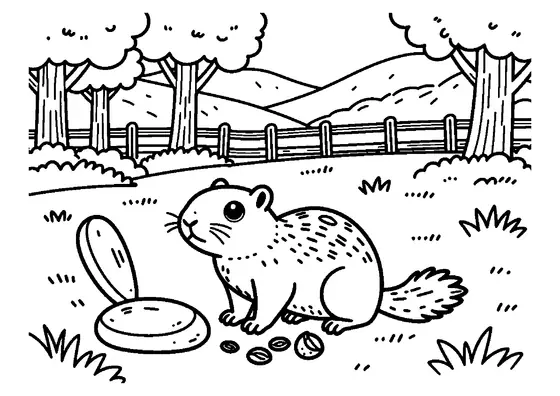
Giant Armadillo by a Forest Burrow
A giant armadillo traverses a quiet forest path next to an earthen termite mound in its tropical habitat.

A4 format (landscape), black outlines on a white background · for home and classroom use
All coloring pages: Wild Animal Coloring Pages
Similar coloring pages: Wild Animal Coloring Pages



What else can you print? Free, no account needed
Custom Name Coloring Pages
Enter your child's name to generate a custom coloring page featuring large outline letters to color and decorate.
Open generator →Connect the Dots Generator
Eight connect-the-dots pictures across three difficulty levels. Features faint outline guides for younger children and dots only for older kids.
Open generator →Printables
Worksheets, tracing lines, mazes and dot-to-dots in A4.
Browse printables →
The Giant Armadillo in Tropical Forests
The giant armadillo is the largest living species of armadillo, residing in the tropical forests and wetlands of South America. Armed with immense front claws, this mammal digs extensive burrows and tears open rock-hard insect mounds to find food. Shaded forest paths provide safe traveling corridors between its daytime shelter and night feeding areas.
Incredible Characteristics of Armadillos
A giant armadillo's body is covered in flexible bony plates called scutes, which act as natural armor against forest predators. Their middle front claws grow up to seven inches long, making them expert excavators capable of breaking down dense dirt mounds in minutes. These nocturnal mammals spend up to sixteen hours a day sleeping inside deep underground burrows.
Real-World Colors of the Giant Armadillo
- Armored shell: Dark brown to blackish upper carapace with yellowish lower bands
- Head and tail: Pale pinkish-gray skin with small scutes
- Front claws: Off-white to dull ivory horn color
- Termite mound: Reddish-brown clay dirt structure
- Forest soil: Dark brown earth covered in dry fallen leaves