
Australian Dingo on a Coastal Dune
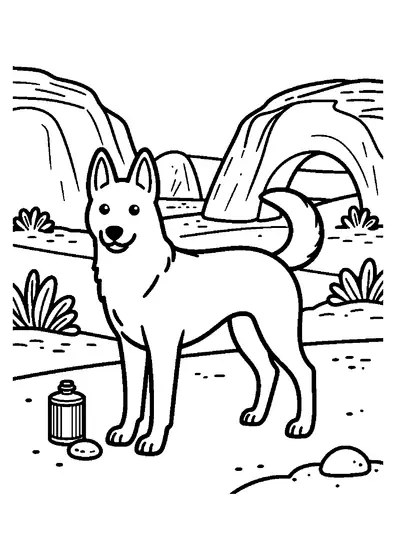
An Australian dingo is depicted on a sandy coastal dune right beside the ocean.

A4 format (landscape), black outlines on a white background · for home and classroom use
All coloring pages: Wild Animal Coloring Pages
Similar coloring pages: Wild Animal Coloring Pages



What else can you print? Free, no account needed
Custom Name Coloring Pages
Enter your child's name to generate a custom coloring page featuring large outline letters to color and decorate.
Open generator →Connect the Dots Generator
Eight connect-the-dots pictures across three difficulty levels. Features faint outline guides for younger children and dots only for older kids.
Open generator →Printables
Worksheets, tracing lines, mazes and dot-to-dots in A4.
Browse printables →
The Australian Dingo on the Coastal Dune
The wild canine animal is set along a sandy coastal landscape near open ocean water. Coastal dunes form dynamic shoreline environments in Australia where land plants and ocean breezes meet.
Fascinating Facts About Dingoes
Dingoes living near coastal habitats often forage along beaches for marine life washed ashore by high tides. These wild canines possess specialized ankle joints that rotate flexibly, helping them climb steep sand slopes effortlessly. Unlike typical domestic dogs, dingoes rarely bark and instead communicate across long distances using melodious howls.
Natural Colors of the Dingo and Coast Environment
- Dingo coat: golden yellow to ginger red with white chest patches
- Dingo eyes: warm amber to medium brown
- Sand dunes: pale cream, tan, and warm golden brown
- Ocean water: deep blue, teal, and foamy white