
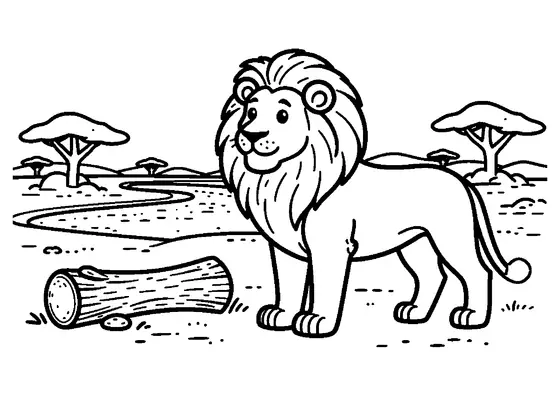
Lion on a Crater Floor
A majestic male lion walks across the grassy floor of a volcanic crater surrounded by acacia trees.

A4 format (landscape), black outlines on a white background · for home and classroom use
All coloring pages: African Animal Coloring Pages
Similar coloring pages: African Animal Coloring Pages




What else can you print? Free, no account needed
Custom Name Coloring Pages
Enter your child's name to generate a custom coloring page featuring large outline letters to color and decorate.
Open generator →Connect the Dots Generator
Eight connect-the-dots pictures across three difficulty levels. Features faint outline guides for younger children and dots only for older kids.
Open generator →Printables
Worksheets, tracing lines, mazes and dot-to-dots in A4.
Browse printables →
Male Lions in African Volcanic Craters
Male lions are impressive apex predators that roam the open savannas and grassy plains of eastern and southern Africa. Volcanic craters create isolated natural sanctuaries where lush grass feeds large herds of wildlife. Flat-topped acacia trees dot these crater floors, offering shade from the intense African midday sun while rocky caldera walls encircle the landscape.
Facts About Crater Wildlife Habitats
Volcanic craters feature steep rocky walls that enclose rich grassland ecosystems with reliable water sources year-round. Lions living inside crater basins often form strong prides that defend territories along grassy valley floors. The unique geography of caldera walls helps retain rainwater, creating lush grazing areas even during dry seasons.
Natural Colors of Lions and Crater Savannas
- Male lion body fur: tawny golden-brown
- Lion mane: dark brown or black
- Crater grassland: golden yellow or dry light green
- Acacia tree foliage: deep green
- Crater wall rocks: reddish-brown or dark gray