
Gazelle on the Tsavo Plains
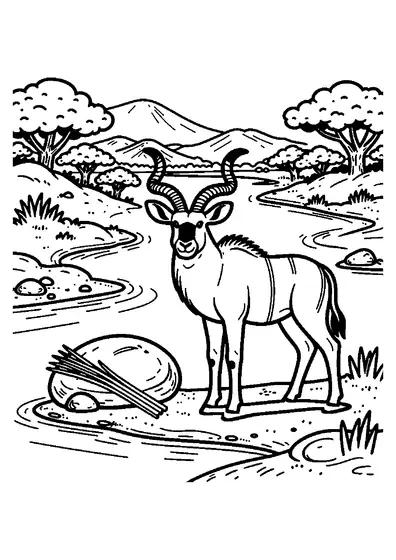
A graceful Grant's gazelle pauses beside a wide rock on the sun-baked Tsavo Plains.

A4 format (portrait), black outlines on a white background · for home and classroom use
All coloring pages: African Animal Coloring Pages
Similar coloring pages: African Animal Coloring Pages



What else can you print? Free, no account needed
Custom Name Coloring Pages
Enter your child's name to generate a custom coloring page featuring large outline letters to color and decorate.
Open generator →Connect the Dots Generator
Eight connect-the-dots pictures across three difficulty levels. Features faint outline guides for younger children and dots only for older kids.
Open generator →Printables
Worksheets, tracing lines, mazes and dot-to-dots in A4.
Browse printables →
Grant's Gazelle on the Arid Tsavo Savanna
A slender Grant's gazelle stands on the dry, thorny terrain of the Tsavo Plains alongside a broad rock. Its lyre-shaped horns and crisp side markings blend naturally into the open savanna environment.
Unique Adaptations of the Grant's Gazelle
Grant's gazelles thrive in dry bushlands where water is scarce. Unlike many other antelopes, they can go their entire lives without drinking standing water by gathering moisture from night-dew covered leaves and desert plants. They also raise their core body temperature during hot days to prevent water loss through sweating.
Natural Colors of the Grant's Gazelle
- Gazelle upper body: fawn brown or tan
- Belly and inner legs: pure white
- Side stripe and facial markings: dark brown or black
- Curved horns: dark charcoal gray
- Savanna rock: warm light brown or gray