
Ladybug on a Heather-Covered Mountain Pass
A small beetle crawls across wild greenery set against distant mountain peaks and rocky trails.

A4 format (landscape), black outlines on a white background · for home and classroom use
All coloring pages: Ladybug Coloring Pages
Similar coloring pages: Ladybug Coloring Pages




What else can you print? Free, no account needed
Custom Name Coloring Pages
Enter your child's name to generate a custom coloring page featuring large outline letters to color and decorate.
Open generator →Connect the Dots Generator
Eight connect-the-dots pictures across three difficulty levels. Features faint outline guides for younger children and dots only for older kids.
Open generator →Printables
Worksheets, tracing lines, mazes and dot-to-dots in A4.
Browse printables →
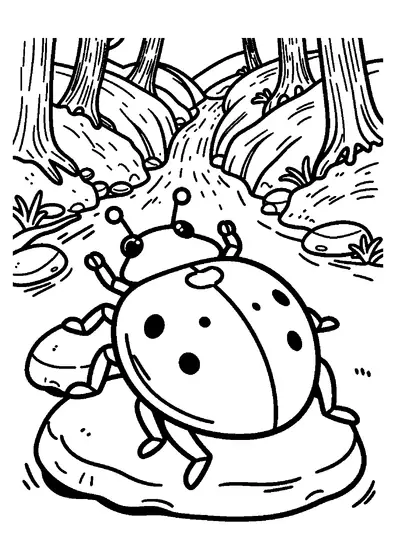
A Ladybug Journeying Across High Altitude Terrain
The scene displays a large ladybug crawling over heather plants along an open mountain pass. Nearby rocks and a winding trail run through the landscape, bordered by gentle ridges that frame the high terrain.
Highland Habitats and Alpine Insects
Ladybugs often thrive in mountain passes during warmer months where alpine flowers and shrubbery provide shelter. Heather shrubs grow well in rocky high-elevation soils, creating ideal feeding grounds for small insects. Mountain paths frequently serve as natural corridors for wildlife migrating through wind-exposed gaps between peaks.
Natural Colors of Mountain Plants and Insects
- Seven-spot ladybug: Bright red elytra with black spots and a dark head
- Heather flowers: Shades of purple, pink, and mauve
- Mountain rocks: Slate gray, granite white, and dark charcoal
- Heather foliage: Deep green and reddish-brown stem fibers
- Winding dirt path: Dusty beige, tan, and light brown earth