
Welsh Pony Beside a Wooden Post Mill
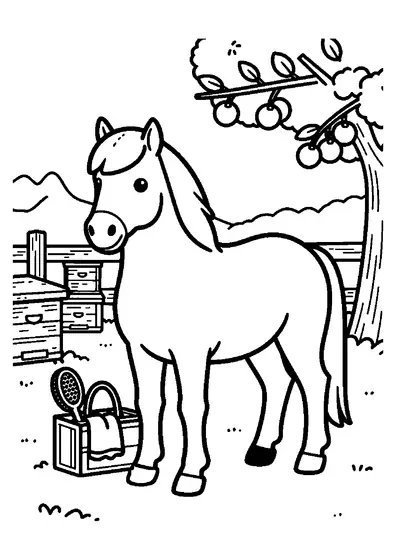
A picturesque country scene presents a Welsh pony grazing on a grassy hill beside a traditional wooden post mill.

A4 format (portrait), black outlines on a white background · for home and classroom use
All coloring pages: Pony Coloring Pages
Similar coloring pages: Pony Coloring Pages



What else can you print? Free, no account needed
Custom Name Coloring Pages
Enter your child's name to generate a custom coloring page featuring large outline letters to color and decorate.
Open generator →Connect the Dots Generator
Eight connect-the-dots pictures across three difficulty levels. Features faint outline guides for younger children and dots only for older kids.
Open generator →Printables
Worksheets, tracing lines, mazes and dot-to-dots in A4.
Browse printables →
Welsh Pony on a Hillside near a Windmill
A hardy pony stands outdoors on a rolling hill next to an iconic timber post mill. Post mills are early types of windmills designed so that the entire wooden body rotates on a central post to face the wind. The surrounding open countryside provides ample breeze to drive large sails while horses graze nearby.
History of Wooden Post Mills
Wooden post mills were developed in Europe during the Middle Ages to grind grain into flour using wind power. Unlike later stone tower mills, the entire wooden house structure of a post mill rests on a single massive oak post, allowing millers to turn the whole mill into incoming breezes.
Real Colors of a Country Windmill Scene
- Welsh pony coat: bay brown, chestnut, gray, or black
- Pony mane and tail: flaxen, dark brown, or black
- Wooden post mill structure: weathered gray, dark timber, or stained oak
- Hillside grass: vibrant green, sage, or golden pasture yellow
- Post mill sails: light canvas cream, off-white, or gray