
Shetland Pony by an Orchard Cider Press
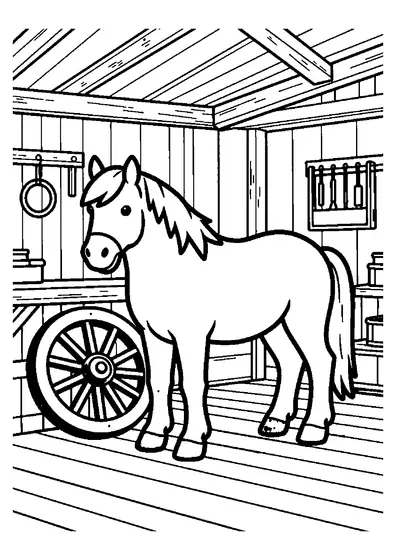
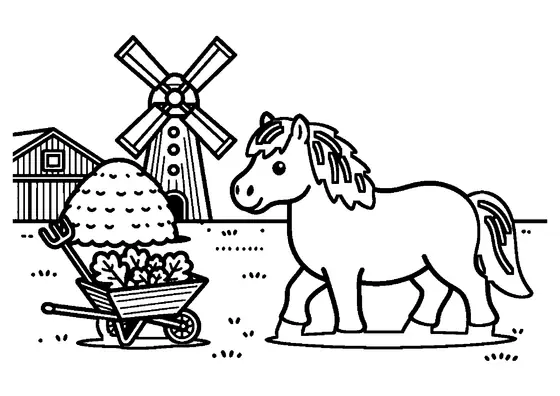
A sturdy Shetland pony rests near a wooden cider press alongside woven baskets heaped with freshly picked orchard apples.

A4 format (landscape), black outlines on a white background · for home and classroom use
All coloring pages: Pony Coloring Pages
Similar coloring pages: Pony Coloring Pages



What else can you print? Free, no account needed
Custom Name Coloring Pages
Enter your child's name to generate a custom coloring page featuring large outline letters to color and decorate.
Open generator →Connect the Dots Generator
Eight connect-the-dots pictures across three difficulty levels. Features faint outline guides for younger children and dots only for older kids.
Open generator →Printables
Worksheets, tracing lines, mazes and dot-to-dots in A4.
Browse printables →
Shetland Ponies during Autumn Harvest
Harvest season in traditional fruit orchards brings busy days of gathering apples and pressing fresh cider in rural yards. Farm ponies often accompanied workers through orchard rows, enjoying fallen fruit while timber presses turned crisp apples into sweet juice.
Traditional Orchard Apple Presses
A cider press uses a heavy wooden screw to crush ground apples inside a slatted barrel, squeezing out pure fruit juice. Woven reed baskets were used to collect apples from trees before carrying them to the press area for sorting and washing.
Natural Colors of an Orchard Harvest Scene
- Shetland pony coat: Dark bay, reddish chestnut, pinto, or charcoal gray
- Cider press frame: Aged oak timber, dark brown wood stain, or cast iron hardware
- Baskets: Light golden straw, tan wicker, or weathered rattan
- Fresh apples: Bright crimson red, golden yellow, or vibrant green