
Shetland Pony in Front of a Glass Conservatory
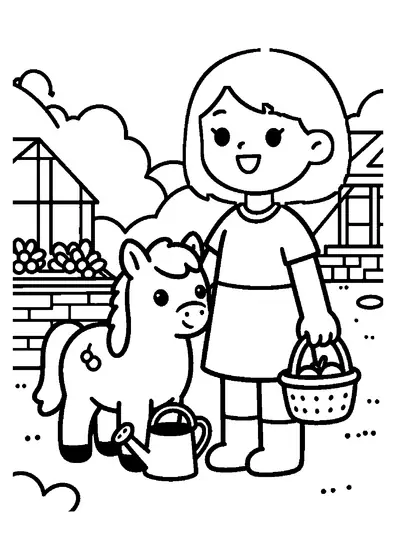
A small Shetland pony rests near a bright glass greenhouse framed by a traditional terracotta planter and a metal watering pitcher.

A4 format (portrait), black outlines on a white background · for home and classroom use
All coloring pages: Pony Coloring Pages
Similar coloring pages: Pony Coloring Pages


What else can you print? Free, no account needed
Custom Name Coloring Pages
Enter your child's name to generate a custom coloring page featuring large outline letters to color and decorate.
Open generator →Connect the Dots Generator
Eight connect-the-dots pictures across three difficulty levels. Features faint outline guides for younger children and dots only for older kids.
Open generator →Printables
Worksheets, tracing lines, mazes and dot-to-dots in A4.
Browse printables →
Shetland Ponies in Estate Gardens
Glass conservatories were popular features on historic estates, providing shelter for delicate botanical specimens throughout winter. Small ponies often roamed garden pathways and lawns surrounding main estate greenhouses during quiet afternoon hours.
Features of Victorian Glass Conservatories
Conservatories utilize expansive glass panels mounted on wrought iron or timber frames to trap sunlight and create a warm environment. Gardeners stored essential tools, clay pots, and metallic watering containers nearby to care for exotic plants grown under glass panels.
Natural Colors of a Garden Conservatory Setting
- Shetland pony fur: Chestnut brown, cream, gray, or spotted black
- Glass conservatory frame: White painted timber, dark green iron, or black metal
- Clay flowerpot: Warm terracotta orange, reddish brown, or tan earth tones
- Watering can: Metallic gold brass, muted yellow, or polished copper