
Boy Grooming a Pony by the Stable
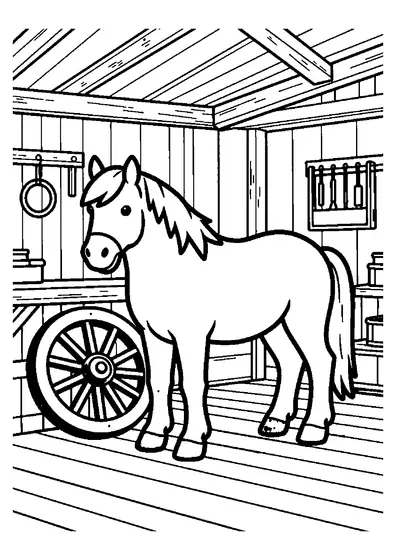
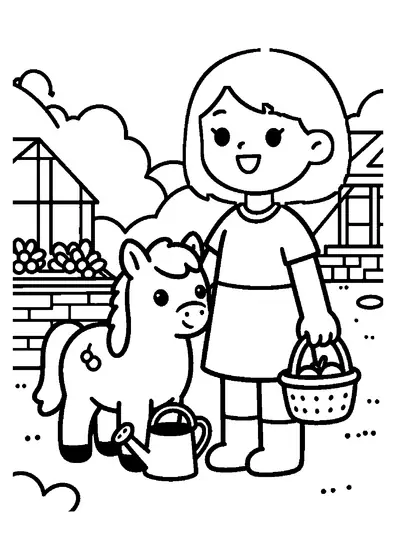
A young boy attends to a Welsh pony outside open wooden stable doors during a morning routine.

A4 format (landscape), black outlines on a white background · for home and classroom use
All coloring pages: Pony Coloring Pages
Similar coloring pages: Pony Coloring Pages



What else can you print? Free, no account needed
Custom Name Coloring Pages
Enter your child's name to generate a custom coloring page featuring large outline letters to color and decorate.
Open generator →Connect the Dots Generator
Eight connect-the-dots pictures across three difficulty levels. Features faint outline guides for younger children and dots only for older kids.
Open generator →Printables
Worksheets, tracing lines, mazes and dot-to-dots in A4.
Browse printables →
Caring for a Pony at the Stable
Brushing and cleaning a pony is an essential part of daily equine care that builds trust between young riders and their animals. Grooming removes dirt from the coat, stimulates blood circulation, and allows owners to check their pony for minor scratches or burs after outdoor activity.
Basic Pony Grooming Routines
Grooming involves using curry combs to loosen dried mud, soft brushes to smooth the coat, and hoof picks to clear small stones. Taking care of a pony requires patience and gentle handling, especially around sensitive areas like the face, ears, and lower legs.
Realistic Colors of a Stable Grooming Scene
- Welsh pony coat: Dappled gray, golden palomino, bay, or dark chestnut
- Boy's clothing: Blue denim jeans, red cotton shirt, or earth-toned jacket
- Stable doors: Stained brown pine, dark forest green, or weathered barn red
- Grooming tools: Bright plastic handles or natural wooden backings with dark bristles