
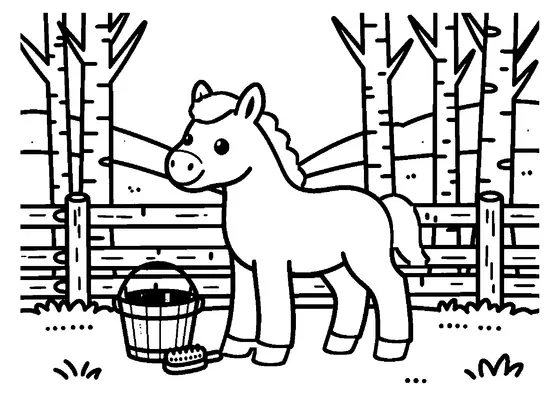
Foal by a Wooden Feeder in a Meadow
A young long-legged foal gathers near a wooden feeder placed in an open forest meadow.

A4 format (portrait), black outlines on a white background · for home and classroom use
All coloring pages: Foal Coloring Pages
Similar coloring pages: Foal Coloring Pages




What else can you print? Free, no account needed
Custom Name Coloring Pages
Enter your child's name to generate a custom coloring page featuring large outline letters to color and decorate.
Open generator →Connect the Dots Generator
Eight connect-the-dots pictures across three difficulty levels. Features faint outline guides for younger children and dots only for older kids.
Open generator →Printables
Worksheets, tracing lines, mazes and dot-to-dots in A4.
Browse printables →
Young Foal in a Forest Meadow
Foals spending time in open pastures learn to navigate natural terrain near outdoor feeding stations. Placed within a forest meadow, a wooden feeder supplies forage as young horses explore their surroundings.
Facts About Meadow Feeders and Foals
Equine feeders situated in pastures are built from heavy timber to withstand outdoor weather conditions and animal contact. Foals begin nibbling solid forage alongside milk within their first few weeks of life, gradually increasing their reliance on hay and pasture grass.
Real Colors of Foals and Feeders
- Foal coat: chestnut brown, bay, black, or light gray
- Foal mane and tail: dark brown, blonde, or black hair
- Wooden feeder: weathered brown or natural timber shades
- Meadow grass: deep green, yellow-green, or dry tan straw