
Dun Horse Eating Hay in a Farm Paddock
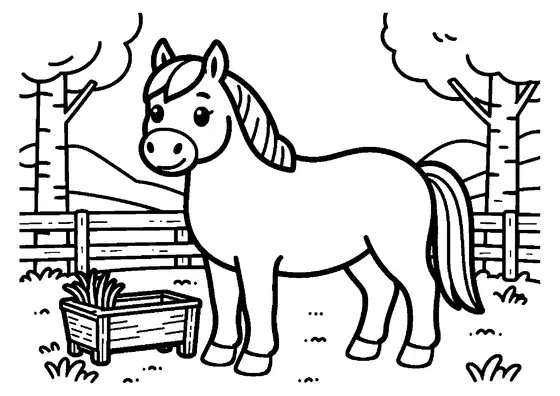
A dun horse with a distinct dark dorsal stripe feeds on dry hay from a feeder inside a countryside farm paddock.

A4 format (portrait), black outlines on a white background · for home and classroom use
All coloring pages: Horse Coloring Pages
Similar coloring pages: Horse Coloring Pages


What else can you print? Free, no account needed
Custom Name Coloring Pages
Enter your child's name to generate a custom coloring page featuring large outline letters to color and decorate.
Open generator →Connect the Dots Generator
Eight connect-the-dots pictures across three difficulty levels. Features faint outline guides for younger children and dots only for older kids.
Open generator →Printables
Worksheets, tracing lines, mazes and dot-to-dots in A4.
Browse printables →
Dun Horses and Farm Paddock Life
Dun horses possess a primitive coat coloration characterized by a yellowish or tan body paired with darker markings. Inside a farm paddock, these animals consume dried grass from elevated hay feeders to maintain energy levels throughout the day.
Characteristics of the Dun Coat Pattern
The dun gene is one of the oldest coat patterns found in wild equine ancestors. In addition to a sandy yellow or golden body shade, true dun horses feature a dark stripe running straight down their spine from mane to tail. Many dun horses also display subtle dark leg striping and dark points on their ears and face.
Real-Life Colors of Dun Horses and Feeding Equipment
- Body coat: sandy tan, golden yellow, or grayish yellow hair
- Dorsal stripe and mane: dark brown or solid black along the back line
- Legs and lower points: dark brown or black extending toward the hooves
- Dried hay: golden yellow, muted olive green, or sun-dried tan grass
- Farm hay feeder: weathered gray metal, galvanized steel, or natural wood timber