
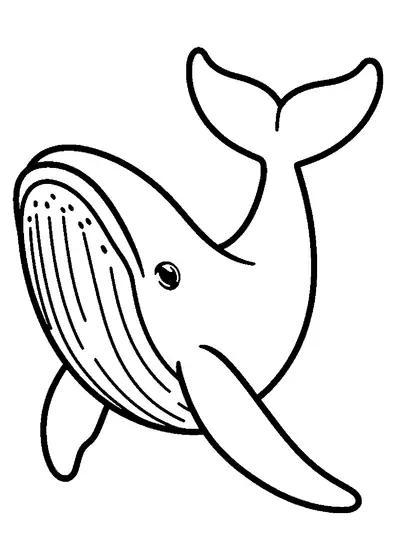
Right Whale Front View
A front view of a massive right whale highlights its broad head and long flippers as it swims calmly in the ocean.

A4 format (portrait), black outlines on a white background · for home and classroom use
All coloring pages: Fish and Ocean Life Coloring Pages
Similar coloring pages: Fish and Ocean Life Coloring Pages




What else can you print? Free, no account needed
Custom Name Coloring Pages
Enter your child's name to generate a custom coloring page featuring large outline letters to color and decorate.
Open generator →Connect the Dots Generator
Eight connect-the-dots pictures across three difficulty levels. Features faint outline guides for younger children and dots only for older kids.
Open generator →Printables
Worksheets, tracing lines, mazes and dot-to-dots in A4.
Browse printables →
Right Whale Swimming in the Ocean
A large right whale glides forward through ocean waters in a front-facing orientation. This baleen whale features a wide head adorned with natural rough patches called callosities and broad flippers extending from its heavy body. Swimming near the surface of cold marine habitats, the whale maintains a peaceful posture as it moves through its native saltwater environment.
Interesting Facts About Right Whales
Right whales spend much of their time near the surface of northern and southern ocean waters. They swim at a slow, steady pace while filtering tiny food particles from sea water through their baleen plates. These ocean giants can stay submerged for up to twenty minutes before surfacing for air.
Natural Colors of a Right Whale
- Skin: dark gray or black
- Callosities on head: rough white or light yellow patches
- Flippers: dark gray
- Belly: dark gray with occasional white patches