
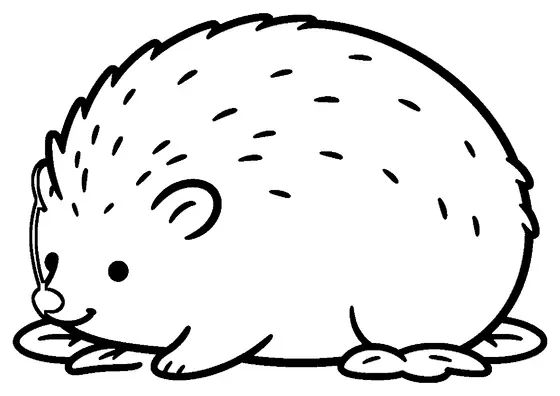
Hedgehog with Bowl
A small spiky hedgehog explores a shallow food bowl during mealtime at a wildlife rehabilitation center.

A4 format (landscape), black outlines on a white background · for home and classroom use
All coloring pages: Farm Animal Coloring Pages
Similar coloring pages: Farm Animal Coloring Pages



What else can you print? Free, no account needed
Custom Name Coloring Pages
Enter your child's name to generate a custom coloring page featuring large outline letters to color and decorate.
Open generator →Connect the Dots Generator
Eight connect-the-dots pictures across three difficulty levels. Features faint outline guides for younger children and dots only for older kids.
Open generator →Printables
Worksheets, tracing lines, mazes and dot-to-dots in A4.
Browse printables →
Feeding Time for a Hedgehog
A small spiky hedgehog stands in a side view next to a shallow bowl filled with food. The creature lowers its pointed snout to sniff the meal during a care routine at a wildlife shelter.
Nocturnal Foraging Habits
Wild hedgehogs rely on a keen sense of smell to locate their daily meals in nature. Wildlife shelters provide shallow dishes filled with water and specialized food to help injured or young animals regain their strength before returning to the outdoors.
Natural Colors of Hedgehogs
- Quills and spines: Dark brown with light beige tips
- Soft belly fur: Pale cream or grayish brown
- Snout and face: Medium brown with a dark damp nose
- Food bowl: Neutral ceramic gray or terracotta brown