
Goat Being Brushed
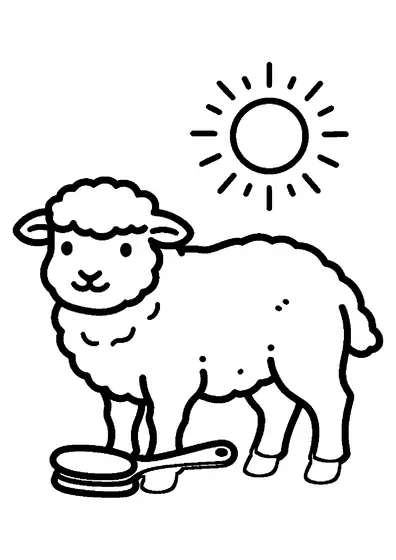
A barnyard goat standing near a grooming tool shows how farm animals receive regular coat maintenance.

A4 format (portrait), black outlines on a white background · for home and classroom use
All coloring pages: Farm Animal Coloring Pages
Similar coloring pages: Farm Animal Coloring Pages


What else can you print? Free, no account needed
Custom Name Coloring Pages
Enter your child's name to generate a custom coloring page featuring large outline letters to color and decorate.
Open generator →Connect the Dots Generator
Eight connect-the-dots pictures across three difficulty levels. Features faint outline guides for younger children and dots only for older kids.
Open generator →Printables
Worksheets, tracing lines, mazes and dot-to-dots in A4.
Browse printables →
Barnyard Goat Grooming
Domestic goats are active farm animals known for their curious nature and sturdy coats. Brushing a goat removes dirt, loose fur, and debris collected while foraging in pastures or barns. Regular coat maintenance keeps farm animals comfortable while fostering a calm bond between livestock and their caretakers.
Horns and Coats of Farm Goats
Both male and female goats can grow horns, which are made of keratin—the same material found in human fingernails. Their hollow horns help regulate body temperature by circulating blood through internal vessel networks during hot weather. Gentle brushing around the neck and shoulders helps goats stay cool while keeping their dense outer coat free of mats.
Natural Colors of a Goat
- Goat fur: crisp white, deep chocolate brown, charcoal gray, or tan with dark markings
- Horns: dull gray, tan, or dark brown with subtle ridge textures
- Hooves: dark gray or black hard keratin tissue
- Grooming brush: dark wooden handle with natural coarse bristles