
Puppy in an Old Country Mill by Flour Sacks
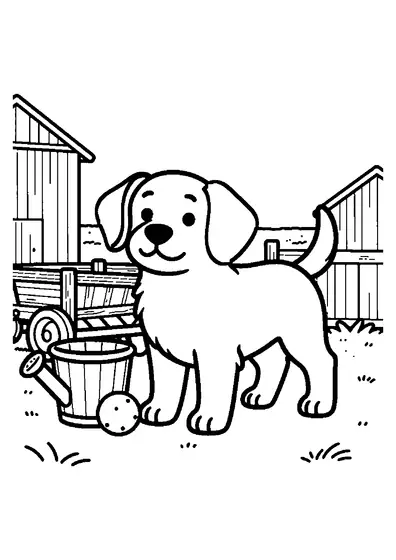
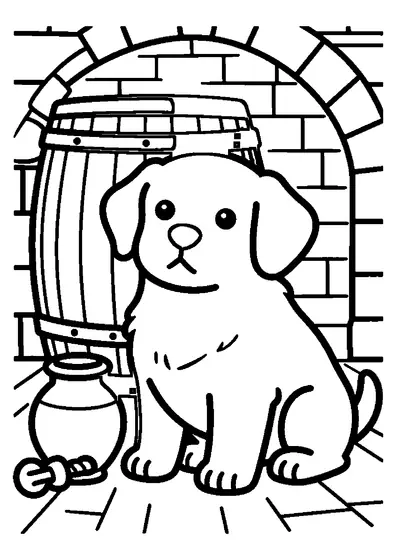
A young dog spends time inside a rustic grinding facility surrounded by stored grain bags and timber framing.

A4 format (portrait), black outlines on a white background · for home and classroom use
All coloring pages: Puppy Coloring Pages
Similar coloring pages: Puppy Coloring Pages




What else can you print? Free, no account needed
Custom Name Coloring Pages
Enter your child's name to generate a custom coloring page featuring large outline letters to color and decorate.
Open generator →Connect the Dots Generator
Eight connect-the-dots pictures across three difficulty levels. Features faint outline guides for younger children and dots only for older kids.
Open generator →Printables
Worksheets, tracing lines, mazes and dot-to-dots in A4.
Browse printables →
A Puppy Inside a Traditional Gristmill
In traditional rural mills, grain was processed into flour using heavy stones powered by water or wind. A young dog roaming around the interior would encounter timber support beams, dusty floors, and burlap sacks filled with freshly ground wheat or rye.
Rural Mill Operations and Working Dogs
Farm dogs historically kept working buildings safe from small rodents that might damage stored grain supplies. Traditional flour sacks were made of woven burlap or sturdy cotton canvas to protect the contents during storage and transport.
Natural Colors of a Country Mill Scene
- Puppy fur: golden, brown, black, or cream depending on the breed
- Puppy nose: dark gray or black
- Flour sacks: light beige, tan, or off-white fabric tones
- Wooden beams: deep brown, aged tan, or weathered gray