
Kitten by a Wooden Farm Cart
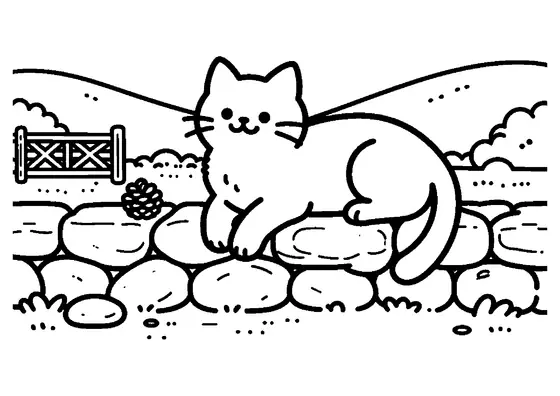
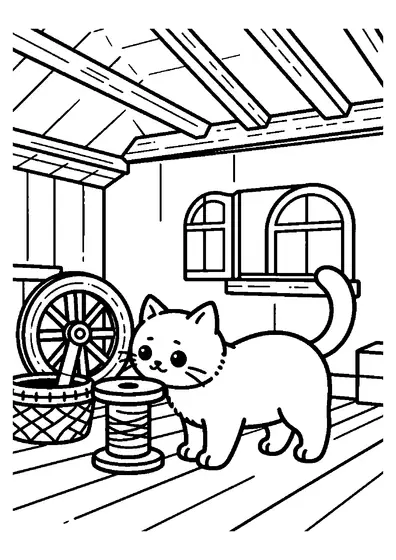
A fluffy kitten rests in a quiet country farmyard beside an old wooden cart and its large spoked wheel.

A4 format (landscape), black outlines on a white background · for home and classroom use
All coloring pages: Cat Coloring Pages
Similar coloring pages: Cat Coloring Pages




What else can you print? Free, no account needed
Custom Name Coloring Pages
Enter your child's name to generate a custom coloring page featuring large outline letters to color and decorate.
Open generator →Connect the Dots Generator
Eight connect-the-dots pictures across three difficulty levels. Features faint outline guides for younger children and dots only for older kids.
Open generator →Printables
Worksheets, tracing lines, mazes and dot-to-dots in A4.
Browse printables →
A Fluffy Kitten in a Rural Farmyard
Farmyards have long relied on wooden carts for transporting harvested crops, firewood, and agricultural tools across fields. Barn cats and kittens are common residents on farms, keeping grain stores safe from pests while finding cozy spots to rest. Old wooden wheels with iron rims reflect historic rural craftsmanship.
How Wooden Cart Wheels Were Constructed
Traditional cart wheels were crafted by wheelwrights using dense hardwoods like oak for the spokes and elm for the central hub. A heated iron band was placed around the outer wooden rim, shrinking as it cooled to pull the wooden pieces tightly together.
Natural Shades of Farmyard Elements
- Fluffy cat coat: Soft gray, ginger orange, white, or dark brown fur
- Cart wooden planks: Weathered gray, rustic brown, or aged timber
- Iron wheel rim: Dark charcoal gray or rusty dark brown metal
- Farmyard ground: Light brown dirt, gravel, or dried golden straw
- Kitten eyes: Bright green, yellow, amber, or light blue