
Kitten by a Waterwheel Beside the Stream
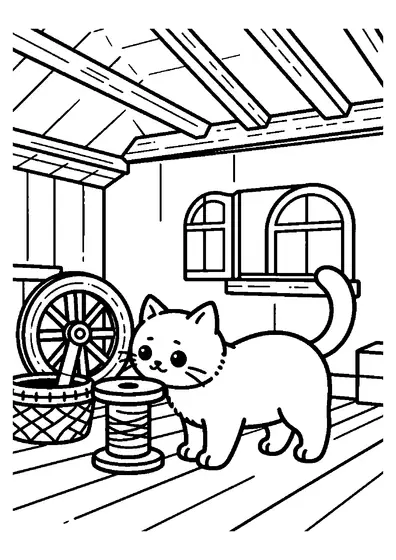
A curious young cat observes a wooden waterwheel turning beside a gentle stream in a peaceful countryside setting.

A4 format (landscape), black outlines on a white background · for home and classroom use
All coloring pages: Cat Coloring Pages
Similar coloring pages: Cat Coloring Pages



What else can you print? Free, no account needed
Custom Name Coloring Pages
Enter your child's name to generate a custom coloring page featuring large outline letters to color and decorate.
Open generator →Connect the Dots Generator
Eight connect-the-dots pictures across three difficulty levels. Features faint outline guides for younger children and dots only for older kids.
Open generator →Printables
Worksheets, tracing lines, mazes and dot-to-dots in A4.
Browse printables →
A Kitten Beside a Country Stream and Watermill
Watermills have historically harnessed the flow of river currents to grind grain or power machinery. When placed along a peaceful stream, these wooden structures direct moving water over a large wheel equipped with paddles or buckets. Cats living near rural mills often explore the surrounding outdoor landscape, keeping watch over the nearby banks.
How Waterwheels Function in Nature
Traditional waterwheels rely entirely on the force of gravity and water flow to rotate and generate mechanical energy. Riverbanks surrounding these mills often host lush vegetation because the constant movement of water keeps the soil moist. Early engineers built watermills along steady streams to ensure a reliable power source throughout changing seasons.
Real Colors of a Stream and Watermill Scene
- Kitten fur: gray, orange, white, or brown
- Kitten eyes: green, blue, or yellow
- Wooden waterwheel: dark brown or weathered gray
- Stream water: clear blue with white foam
- Riverbank soil: rich dark brown