
Polish Dwarf Rabbit by an Old Post Mill
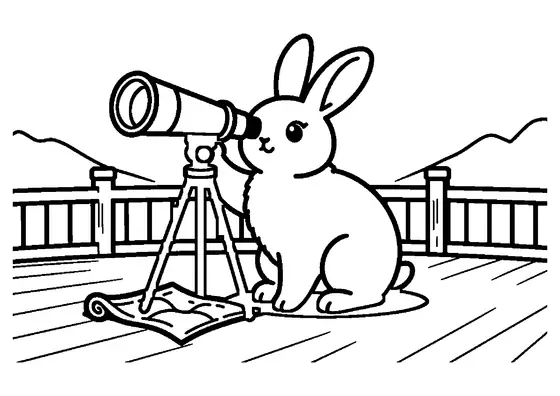
A small Polish Dwarf rabbit stands near a wooden crate on a grassy hill overlooking a historic wooden post mill.

A4 format (landscape), black outlines on a white background · for home and classroom use
All coloring pages: Bunny Coloring Pages
Similar coloring pages: Bunny Coloring Pages


What else can you print? Free, no account needed
Custom Name Coloring Pages
Enter your child's name to generate a custom coloring page featuring large outline letters to color and decorate.
Open generator →Connect the Dots Generator
Eight connect-the-dots pictures across three difficulty levels. Features faint outline guides for younger children and dots only for older kids.
Open generator →Printables
Worksheets, tracing lines, mazes and dot-to-dots in A4.
Browse printables →
The Polish Dwarf Rabbit Beside a Historic Post Mill
The Polish Dwarf rabbit is one of the smallest domestic rabbit breeds, featuring short ears and a compact body shape. Traditional post mills are early timber windmills where the entire wooden body of the mill rotates on a central vertical post to face the wind.
How Traditional Wooden Post Mills Operated
Post mills were invented in medieval Europe to grind grain into flour using wind power. Built entirely on a massive central oak beam called a trestle post, the miller could turn the whole building manually so the wooden sails caught the breeze from any direction.
Real World Colors of the Polish Dwarf Rabbit and Windmill Setting
- Polish Dwarf rabbit coat: pure white, jet black, chocolate, or blue
- Rabbit eyes: bright ruby red or deep brown
- Wooden crate: pale natural pine or sun-bleached brown wood
- Post mill structure: dark weathered oak timber or tarred wooden planks
- Hillside soil and grass: rich brown earth with olive green tones