
Fluffy Rabbit on a Heather Moor at Sunrise
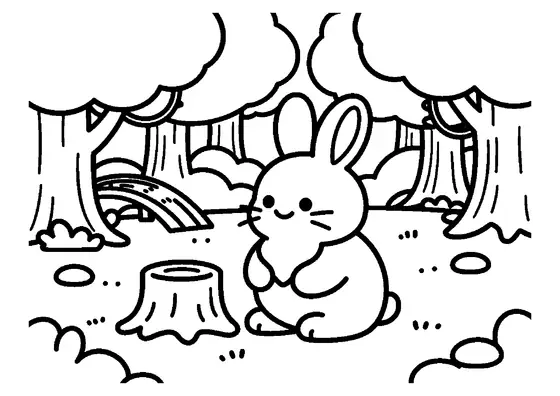
A fluffy rabbit rests on an open heather moor during early morning sunrise next to a basket lying on the ground.

A4 format (landscape), black outlines on a white background · for home and classroom use
All coloring pages: Bunny Coloring Pages
Similar coloring pages: Bunny Coloring Pages


What else can you print? Free, no account needed
Custom Name Coloring Pages
Enter your child's name to generate a custom coloring page featuring large outline letters to color and decorate.
Open generator →Connect the Dots Generator
Eight connect-the-dots pictures across three difficulty levels. Features faint outline guides for younger children and dots only for older kids.
Open generator →Printables
Worksheets, tracing lines, mazes and dot-to-dots in A4.
Browse printables →
A Fluffy Rabbit on a Dawn Heather Moor
The morning scene features a long-haired rabbit gathering quietly on a wild moorland covered in blooming heather plants. Nearby, a woven basket lies on the natural terrain, surrounding the animal with peaceful morning outdoor elements as the sun begins to rise.
Fascinating Facts About Heather Moors
Heather moorlands cover upland regions across Northern Europe, blooming into rich shades of purple every late summer. Rabbits inhabiting moors dig burrows under low wooden shrubbery or heather roots to protect themselves from strong winds and predators.
Natural Colors of a Heather Moor Scene
- Rabbit fur: soft cream, sandy beige, or slate gray
- Blooming heather flowers: pale lavender, pink, or deep purple
- Heather stems and foliage: olive green or rust-brown
- Morning sky: warm pastel peach, soft yellow, or light blue
- Woven basket: natural straw yellow or tan wood