
Penguin Sliding Down an Ice Chute
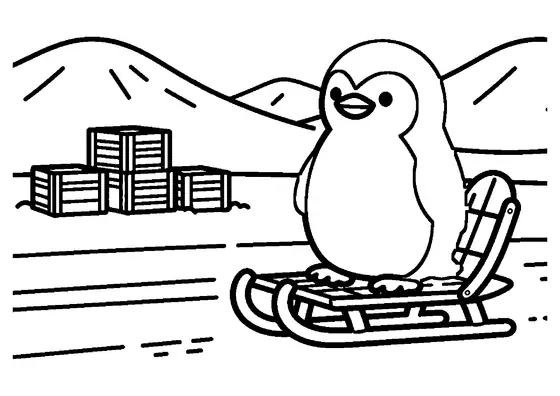
A penguin glides quickly down a frozen slope, surrounded by cold polar surroundings.

A4 format (landscape), black outlines on a white background · for home and classroom use
All coloring pages: Penguin Coloring Pages
Similar coloring pages: Penguin Coloring Pages



What else can you print? Free, no account needed
Custom Name Coloring Pages
Enter your child's name to generate a custom coloring page featuring large outline letters to color and decorate.
Open generator →Connect the Dots Generator
Eight connect-the-dots pictures across three difficulty levels. Features faint outline guides for younger children and dots only for older kids.
Open generator →Printables
Worksheets, tracing lines, mazes and dot-to-dots in A4.
Browse printables →
A Penguin Riding an Ice Chute
A penguin moves across an icy surface by sliding on its stomach, using its feet and flippers to steer down the slippery chute. This natural mode of travel allows the sea bird to cover icy ground efficiently while navigating its polar environment.
How Penguins Travel on Polar Ice
Sliding on their bellies, a behavior known as tobogganing, helps penguins travel across hard ice much faster than waddling on foot. It also conserves energy during long journeys between their nesting colonies and the ocean waters where they hunt for fish.
Natural Colors of a Penguin and Ice
- Penguin flippers and back: dark black or dark blue-gray
- Penguin belly and chest: bright white
- Penguin feet and webbed toes: dark gray or black
- Penguin beak: dark gray with small pinkish or yellowish patches
- Ice chute and snow: pale blue, translucent white, or cool gray