
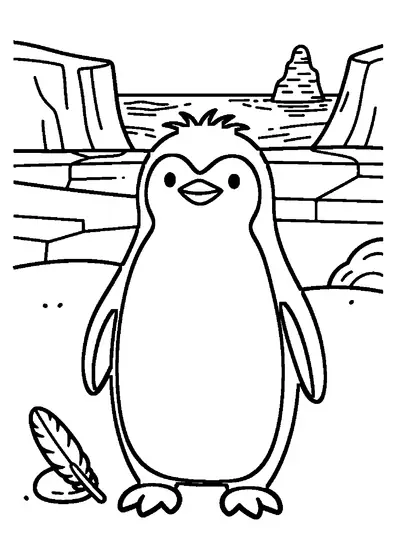
Macaroni Penguin Beneath the Sea Stacks
A macaroni penguin spends time along an open shoreline situated directly below towering sea stacks.

A4 format (portrait), black outlines on a white background · for home and classroom use
All coloring pages: Penguin Coloring Pages
Similar coloring pages: Penguin Coloring Pages


What else can you print? Free, no account needed
Custom Name Coloring Pages
Enter your child's name to generate a custom coloring page featuring large outline letters to color and decorate.
Open generator →Connect the Dots Generator
Eight connect-the-dots pictures across three difficulty levels. Features faint outline guides for younger children and dots only for older kids.
Open generator →Printables
Worksheets, tracing lines, mazes and dot-to-dots in A4.
Browse printables →
Macaroni Penguins in Ocean Shoreline Habitats
This illustration highlights a macaroni penguin sitting along a coastal shoreline. A solitary seashell rests on the ground next to the bird. In the background, tall sea stacks rise up from the water, framing the ocean landscape where these migratory seabirds gather.
Subantarctic Island Nesting Grounds
Macaroni penguins assemble in massive breeding colonies on rocky Subantarctic islands during the summer months. They travel immense distances across open ocean waters during winter, remaining at sea for months without returning to land. Their unique common name comes from the bright yellow crest plumes that resembled eighteenth-century European fashion trends.
Authentic Colors of the Macaroni Penguin
- Crest plumes: golden yellow and orange
- Upper body and wings: charcoal black
- Underside and belly: clean white
- Beak: thick orange-brown
- Sea stacks: light gray and tan