
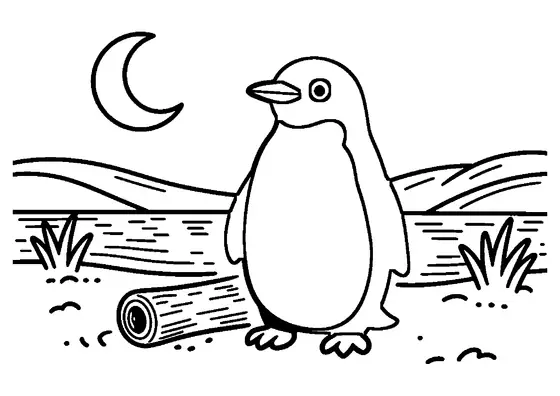
Humboldt Penguin by a Chalk Headland
A Humboldt penguin strolls across an expanse of beach near a fish, a seashell, and a towering chalk cliff.

A4 format (portrait), black outlines on a white background · for home and classroom use
All coloring pages: Penguin Coloring Pages
Similar coloring pages: Penguin Coloring Pages



What else can you print? Free, no account needed
Custom Name Coloring Pages
Enter your child's name to generate a custom coloring page featuring large outline letters to color and decorate.
Open generator →Connect the Dots Generator
Eight connect-the-dots pictures across three difficulty levels. Features faint outline guides for younger children and dots only for older kids.
Open generator →Printables
Worksheets, tracing lines, mazes and dot-to-dots in A4.
Browse printables →
Humboldt Penguins Along Coastal Chalk Cliffs
The image depicts a Humboldt penguin walking across a wide stretch of coast. A small fish and a seashell lie near the bird's path along the shoreline. In the background, a pale chalk headland rises above the beach, reflecting the South American coastal habitats where these birds roam.
Ocean Currents and South American Shores
Humboldt penguins inhabit the temperate coastal regions of Peru and Chile, relying on the cold Humboldt Current for food. Unlike Antarctic species, they nest in guano deposits or burrows dug into soft coastal rock to shelter from heat. A patch of bare pink skin around their beak helps regulate body temperature in warmer climates.
Real Colors of a Humboldt Penguin
- Face and back feathers: dark black
- Chest band: single black horseshoe curve
- Abdomen: white with tiny black dots
- Bare skin around beak: soft pink
- Chalk headland: creamy white and light beige