
Chinstrap Penguin by an Icy Windbreak
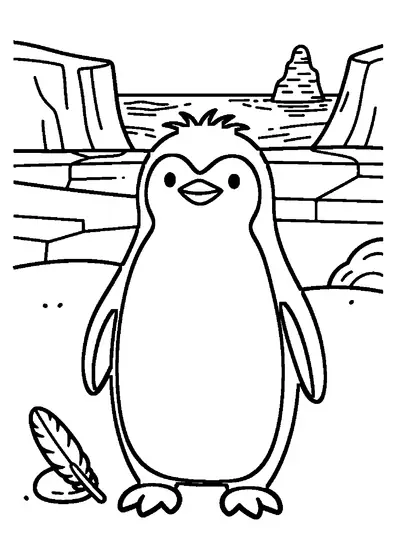
This page depicts a chinstrap penguin outdoors near a wooden snow fence and a frost-covered cabin.

A4 format (portrait), black outlines on a white background · for home and classroom use
All coloring pages: Penguin Coloring Pages
Similar coloring pages: Penguin Coloring Pages



What else can you print? Free, no account needed
Custom Name Coloring Pages
Enter your child's name to generate a custom coloring page featuring large outline letters to color and decorate.
Open generator →Connect the Dots Generator
Eight connect-the-dots pictures across three difficulty levels. Features faint outline guides for younger children and dots only for older kids.
Open generator →Printables
Worksheets, tracing lines, mazes and dot-to-dots in A4.
Browse printables →
Chinstrap Penguin near a Winter Windbreak
A chinstrap penguin is shown on a snowy slope in a cold polar environment. Next to the bird stands a wooden snow fence designed to block blowing snow, along with a cabin covered in frost.
Facts About Windbreaks and Polar Shelters
Wooden snow fences help control where snow drifts accumulate by slowing down the wind near structures. In extreme Antarctic climates, field cabins provide essential shelter for scientists studying wildlife during harsh blizzards. These structures must withstand sub-zero temperatures and severe winds throughout the polar winter.
Natural Colors of the Chinstrap Penguin Scene
- Chinstrap penguin body: Black feathers cover the back, head, and wings, while the belly is bright white
- Facial stripe: A thin band of black feathers extends under the chin like a helmet strap
- Penguin feet and bill: Pinkish feet with dark soles and a short black bill
- Wooden snow fence: Weathered gray or natural brown timber
- Cabin roof and slope: White snow and icy blue frost patterns