
Chinstrap Penguin by a Polar Station Fence
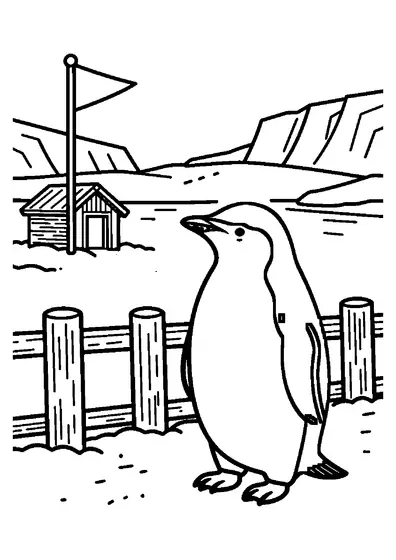
This scene shows a chinstrap penguin walking near a polar station fence with radio masts, a snow shovel, and a bucket nearby.

A4 format (landscape), black outlines on a white background · for home and classroom use
All coloring pages: Penguin Coloring Pages
Similar coloring pages: Penguin Coloring Pages



What else can you print? Free, no account needed
Custom Name Coloring Pages
Enter your child's name to generate a custom coloring page featuring large outline letters to color and decorate.
Open generator →Connect the Dots Generator
Eight connect-the-dots pictures across three difficulty levels. Features faint outline guides for younger children and dots only for older kids.
Open generator →Printables
Worksheets, tracing lines, mazes and dot-to-dots in A4.
Browse printables →
Chinstrap Penguin at a Polar Station
A chinstrap penguin walks beside the perimeter fence of a polar research station. In the surrounding station area, tall radio masts rise into the sky, while a snow shovel and a bucket sit close to the fence line.
Habitat Facts About Chinstrap Penguins
Chinstrap penguins live in Antarctic regions where scientific research stations operate year-round. These birds build nests using small stones and gravel found along icy shorelines to keep their eggs dry above melting snow. They often navigate near man-made structures along coastal base camps while traveling between their nesting sites and the open ocean.
Natural Colors of the Chinstrap Penguin Scene
- Chinstrap penguin feathers: Black on the back and crown, with a pure white belly and a thin black line under the chin
- Station fence: Dark gray or weather-coated brown
- Radio masts: Metallic gray or bright orange safety paint
- Snow shovel and bucket: Vibrant yellow, red, or blue plastic
- Penguin feet and beak: Pink feet with dark soles and a black beak