
Chinstrap Penguin by a Wooden Igloo
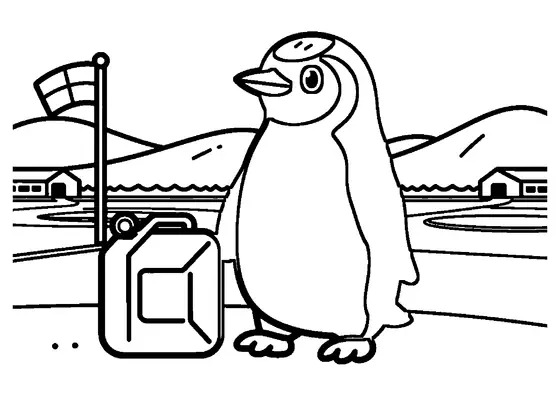
A chinstrap penguin rests near a wooden sign, an ice sculpture, and a polar village backdrop.

A4 format (portrait), black outlines on a white background · for home and classroom use
All coloring pages: Penguin Coloring Pages
Similar coloring pages: Penguin Coloring Pages



What else can you print? Free, no account needed
Custom Name Coloring Pages
Enter your child's name to generate a custom coloring page featuring large outline letters to color and decorate.
Open generator →Connect the Dots Generator
Eight connect-the-dots pictures across three difficulty levels. Features faint outline guides for younger children and dots only for older kids.
Open generator →Printables
Worksheets, tracing lines, mazes and dot-to-dots in A4.
Browse printables →
Chinstrap Penguins in Polar Settings
Chinstrap penguins inhabit cold coastal environments where research outposts and polar village structures are constructed. In this polar landscape, a chinstrap penguin stands near a carved ice sculpture and a wooden sign marker, with a wooden igloo structure nearby. The background features elements of a quiet polar village surrounded by snow.
Remarkable Facts About Chinstrap Penguins
Chinstrap penguins receive their name from the narrow black band of feathers running under their chin, which resembles a helmet strap. These agile seabirds are exceptional swimmers that can dive over two hundred feet deep in search of krill and small fish. They inhabit rocky Antarctic islands and icy shores, living in vast colonies that sometimes contain hundreds of thousands of birds.
Natural Colors of the Polar Environment
- Penguin back and head feathers: Jet black plumage
- Penguin belly and neck feathers: Pure white plumage
- Narrow chin band across penguin face: Black feather strip
- Penguin beak: Black or dark horn color
- Ice sculpture: Pale translucent blue or white ice
- Wooden sign and igloo walls: Weathered brown timber