
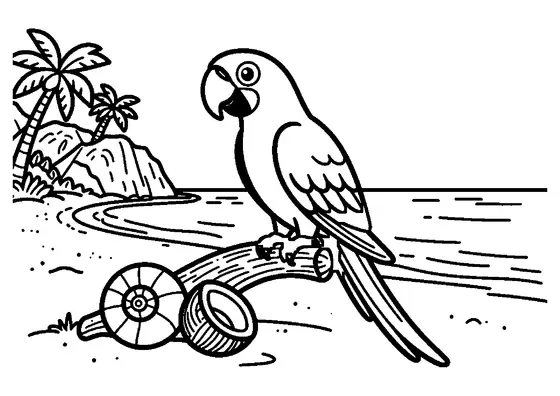
Parrot on a Cocoa Plantation
A wild parrot rests near ripe agricultural pods along shade-grown tree rows during harvest season on a tropical farm.

A4 format (landscape), black outlines on a white background · for home and classroom use
All coloring pages: Parrot and Flamingo Coloring Pages
Similar coloring pages: Parrot and Flamingo Coloring Pages




What else can you print? Free, no account needed
Custom Name Coloring Pages
Enter your child's name to generate a custom coloring page featuring large outline letters to color and decorate.
Open generator →Connect the Dots Generator
Eight connect-the-dots pictures across three difficulty levels. Features faint outline guides for younger children and dots only for older kids.
Open generator →Printables
Worksheets, tracing lines, mazes and dot-to-dots in A4.
Browse printables →
Parrots in Agricultural Cocoa Groves
Cocoa plantations utilize wide rows of large shade trees to cultivate cocoa pods in tropical agricultural regions. During harvest season, wild parrots often visit these agricultural groves, perching among dense branches and open cocoa fruits that grow directly on mature tree trunks.
How Cocoa Fruit Grows in Rainforest Farms
Unlike most fruit trees, cocoa pods grow directly out of the main tree trunk and older branches in a process called cauliflory. Tropical shade plantations preserve native forest canopy trees, which allows local parrot species to coexist alongside sustainable agricultural fields.
Colors of Cocoa Pods and Plantation Wildlife
- Parrot plumage: vivid green with red accents
- Ripe cocoa pod: deep yellow, orange, or purple-red
- Cocoa beans inside pod: white pulpy seed coating with brown seeds
- Plantation tree bark: dark brownish gray
- Cocoa tree leaves: glossy dark green