
Macaw in a Secluded Tropical Cove
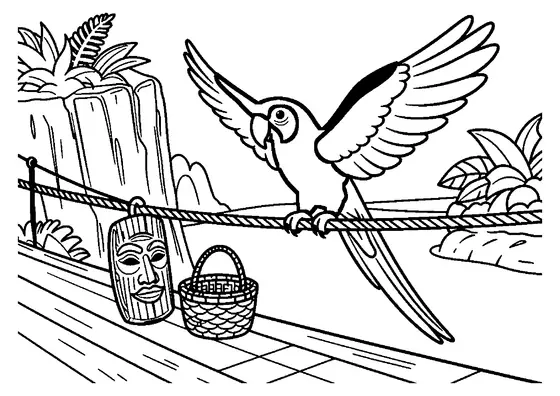
A long-tailed macaw perches on a weathered root along a quiet ocean inlet lined with palms and coastal rocks.

A4 format (landscape), black outlines on a white background · for home and classroom use
All coloring pages: Parrot and Flamingo Coloring Pages
Similar coloring pages: Parrot and Flamingo Coloring Pages



What else can you print? Free, no account needed
Custom Name Coloring Pages
Enter your child's name to generate a custom coloring page featuring large outline letters to color and decorate.
Open generator →Connect the Dots Generator
Eight connect-the-dots pictures across three difficulty levels. Features faint outline guides for younger children and dots only for older kids.
Open generator →Printables
Worksheets, tracing lines, mazes and dot-to-dots in A4.
Browse printables →
A Macaw Resting in a Quiet Coastal Cove
Near the edge of a sheltered cove, a macaw perches on a sturdy tree root beside a large seashell. A rocky cliff rises nearby, framed by palm trees and the soft motion of coastal waves. This tranquil shoreline environment combines coastal elements with the tropical vegetation where wild parrots often search for food.
Coastal Habitats of Tropical Parrots
While macaws are famously associated with deep rainforests, several species inhabit coastal regions and island ecosystems. In these coastal settings, palm trees offer nesting sites in hollow trunks, while shoreline trees provide fruit and seeds. Coastal cliffs and sheltered coves protect these birds from strong open ocean winds.
Natural Colors of the Coastal Cove and Macaw
- Macaw feathers: rich scarlet red, electric blue, and golden yellow
- Tree root: weathered silver gray, dark driftwood brown, or mossy tan
- Coastal seashell: creamy white, soft coral pink, or spiraled orange
- Palm tree fronds: bright emerald green or tropical lime green
- Sea waves: translucent turquoise blue, deep sapphire, and white sea foam