
Flamingo by a Stone Cascade
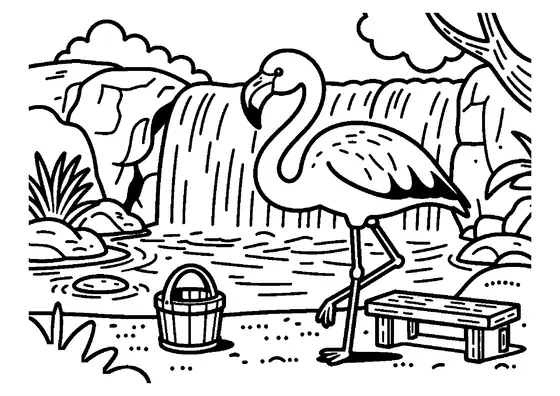
A slender flamingo pauses near a calm stone pool filled by a cascading stream of falling water.

A4 format (landscape), black outlines on a white background · for home and classroom use
All coloring pages: Parrot and Flamingo Coloring Pages
Similar coloring pages: Parrot and Flamingo Coloring Pages



What else can you print? Free, no account needed
Custom Name Coloring Pages
Enter your child's name to generate a custom coloring page featuring large outline letters to color and decorate.
Open generator →Connect the Dots Generator
Eight connect-the-dots pictures across three difficulty levels. Features faint outline guides for younger children and dots only for older kids.
Open generator →Printables
Worksheets, tracing lines, mazes and dot-to-dots in A4.
Browse printables →
A Flamingo Resting by Cascading Waters
A classic wading flamingo rests near smooth rocks alongside a shallow stone pool receiving water from a small cascading waterfall. These tall waterbirds are frequently observed standing near shallow basins and flowing stream outlets where tiny aquatic organisms gather.
How Flamingos Interact with Flowing Water
Flamingos prefer shallow water environments where they can filter food using their specialized down-curved bills. Running streams and stone cascades keep pools oxygenated and rich in microscopic algae and small crustaceans, which form the mainstay of the bird's natural diet.
Realistic Colors of the Flamingo and Waterfall
- Flamingo feathers: pale salmon pink to deep reddish-pink
- Flamingo beak: bright pink with a distinct black tip
- Flamingo legs and webbed feet: vibrant pink or reddish gray
- Cascading pool water: soft turquoise or sky blue
- Waterfall stones: charcoal gray, slate, and warm tan