
Chilean Flamingo on a Shallow Sandbar in a River Delta
A Chilean flamingo stands on a sandy mudflat surrounded by shallow delta waters and washed-up driftwood.

A4 format (landscape), black outlines on a white background · for home and classroom use
All coloring pages: Parrot and Flamingo Coloring Pages
Similar coloring pages: Parrot and Flamingo Coloring Pages
Rainbow Lorikeet Beside a Basket of Fresh Figs
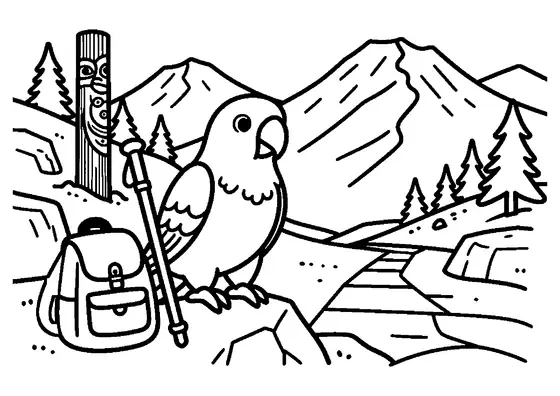
Kea Parrot by a Carved Wooden Totem in a Mountain Valley
Ruby-Throated Hummingbird Beside a Large Fuchsia Flower
Rose-Ringed Parakeet by a Stone Birdbath in a Bamboo Garden
Senegal Parrot Beside a Ceramic Plate of Nuts
Red-Fan Parrot at a Rainforest Field Station



What else can you print? Free, no account needed
Custom Name Coloring Pages
Enter your child's name to generate a custom coloring page featuring large outline letters to color and decorate.
Open generator →Connect the Dots Generator
Eight connect-the-dots pictures across three difficulty levels. Features faint outline guides for younger children and dots only for older kids.
Open generator →Printables
Worksheets, tracing lines, mazes and dot-to-dots in A4.
Browse printables →
Chilean Flamingo in a Wetland Delta
The illustration presents a Chilean flamingo wading across a shallow river delta sandbar. Weathered pieces of driftwood rest along the water edge near the solitary wetland bird.
South American Flamingo Habitats
Chilean flamingos inhabit muddy lagoons, alkaline mountain lakes, and coastal river estuaries throughout South America. They thrive in brackish waters where few other animals can live, using specialized filter-feeding bills to extract algae and small crustaceans.
Realistic Color Palette for Flamingos and Deltas
- Chilean flamingo feathers: Pale pink with crimson red wing coverts
- Flamingo flight feathers: Jet black plumage hidden under wing edges
- Flamingo legs: Light gray with distinctive bright pink joints
- Flamingo bill: Black tip spanning over half the bill length with a pink base
- Driftwood and sandbar: Bleached tan, gray wood, and damp beige silt