
Short-Eared Owl on a Marsh Boardwalk
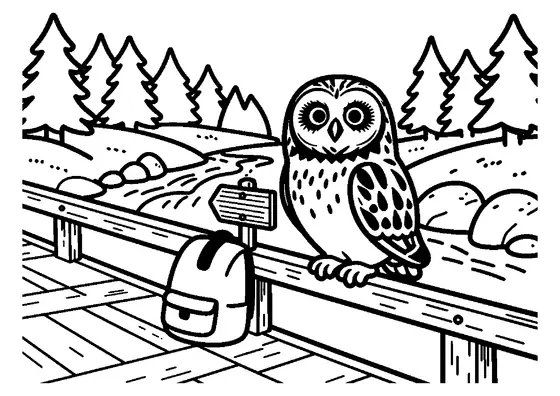
This wildlife illustration features a short-eared owl resting on a wooden boardwalk post above open wetland marshes.

A4 format (landscape), black outlines on a white background · for home and classroom use
All coloring pages: Owl Coloring Pages
Similar coloring pages: Owl Coloring Pages



What else can you print? Free, no account needed
Custom Name Coloring Pages
Enter your child's name to generate a custom coloring page featuring large outline letters to color and decorate.
Open generator →Connect the Dots Generator
Eight connect-the-dots pictures across three difficulty levels. Features faint outline guides for younger children and dots only for older kids.
Open generator →Printables
Worksheets, tracing lines, mazes and dot-to-dots in A4.
Browse printables →
Short-Eared Owl in a Wetland Habitat
The short-eared owl is a distinctive bird of prey often seen in open habitats like marshes, peat bogs, and coastal wetlands. Unlike many other owls that stay hidden in dense forests, this species prefers wide vistas where it can scan grassy ground for small mammals. Standing on a boardwalk post gives the bird an elevated position to survey the damp terrain below.
Nesting and Hunting Habits in the Bogs
Short-eared owls nest directly on the ground in hidden spots among tall reeds and dense grass rather than high up in trees. They are famously active during daylight and dusk, flying low over meadows with irregular, butterfly-like wingbeats to catch field mice. These owls are also migratory, traveling long distances across continents as seasons change and food sources shift.
Natural Colors of the Short-Eared Owl and Marsh
- Short-eared owl plumage: streaked brown, tawny, and buff feathers for camouflage
- Owl eyes: striking bright yellow surrounded by black mascara-like rings
- Owl beak: dark gray or black curved bill
- Wooden boardwalk post: weathered gray or muted brown timber
- Wetland marsh plants: olive green reeds, brownish grasses, and murky water tones