
Barn Owl on Wagon Wheels by an Old Forge
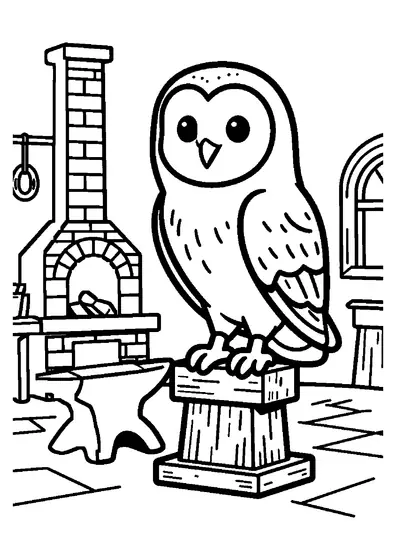
A heart-faced barn owl perches on an aged wooden wagon wheel near a traditional blacksmith forge.

A4 format (portrait), black outlines on a white background · for home and classroom use
All coloring pages: Owl Coloring Pages
Similar coloring pages: Owl Coloring Pages


What else can you print? Free, no account needed
Custom Name Coloring Pages
Enter your child's name to generate a custom coloring page featuring large outline letters to color and decorate.
Open generator →Connect the Dots Generator
Eight connect-the-dots pictures across three difficulty levels. Features faint outline guides for younger children and dots only for older kids.
Open generator →Printables
Worksheets, tracing lines, mazes and dot-to-dots in A4.
Browse printables →
Barn Owl Perched by a Village Forge
This setting presents a barn owl resting atop a heavy wooden wagon wheel outside a historical village forge. The rustic workshop area features traditional metalworking elements and timber structures. Positioned beside the old wheel, the silent hunter keeps watch over the quiet farmyard surroundings.
The Role of Barn Owls Around Historical Workshops
Blacksmith shops and village barns historically provided ideal roosting locations for barn owls due to open rafters and abundant shelter. Blacksmiths appreciated having owls nearby because the birds kept grain stores and work areas free of mice and rats. The heart-shaped face of a barn owl acts like a satellite dish, focusing sound directly toward its ears.
Genuine Colors of the Forge Scene
- Barn owl upper body: Golden-brown with delicate gray and white speckled patterns
- Barn owl face and chest: Pure white or light cream color
- Wooden wagon wheel: Weathered brown, charcoal gray, and iron-rimmed dark slate
- Rustic forge exterior: Aged brick red, dark timber brown, and stone gray