
Eurasian Eagle-Owl at a Forest Apiary
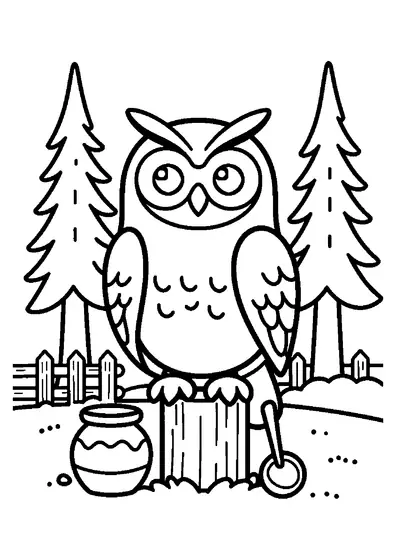
A countryside scene shows a Eurasian eagle-owl perched beside a traditional log hive at a forest apiary.

A4 format (portrait), black outlines on a white background · for home and classroom use
All coloring pages: Owl Coloring Pages
Similar coloring pages: Owl Coloring Pages


What else can you print? Free, no account needed
Custom Name Coloring Pages
Enter your child's name to generate a custom coloring page featuring large outline letters to color and decorate.
Open generator →Connect the Dots Generator
Eight connect-the-dots pictures across three difficulty levels. Features faint outline guides for younger children and dots only for older kids.
Open generator →Printables
Worksheets, tracing lines, mazes and dot-to-dots in A4.
Browse printables →
Eurasian Eagle-Owls in Apiary Settings
Forest apiaries are collections of beehives placed within wooded clearings where honeybees collect nectar from wildflowers and trees. Traditional log hives and wooden frames containing honeycomb are common features in these apiaries, offering sturdy surfaces where large owls can pause.
One of the Largest Owls in the World
The Eurasian eagle-owl is among the largest owl species on Earth, featuring prominent ear tufts and a wingspan exceeding five feet. These powerful birds inhabit diverse environments, from dense woodlands to rocky crags. Despite their intimidating size, they hunt mostly at night and remain elusive to humans.
Realistic Colors of the Eagle-Owl and Hive
- Eurasian eagle-owl feathers: Tawny brown striped with dark blackish streaks
- Eagle-owl eyes: Vibrant orange or deep yellow iris tones
- Log beehive: Natural tree bark gray and rustic brown shades
- Honeycomb frame: Pale wooden border with golden-yellow wax cells