
Little Owl in an Old Oil Mill by a Screw Press
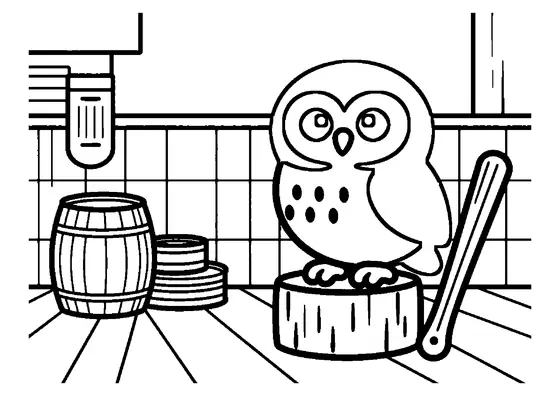
An interior scene features a little owl perching on a wooden table beside an oil jug in an ancient mill.

A4 format (landscape), black outlines on a white background · for home and classroom use
All coloring pages: Owl Coloring Pages
Similar coloring pages: Owl Coloring Pages



What else can you print? Free, no account needed
Custom Name Coloring Pages
Enter your child's name to generate a custom coloring page featuring large outline letters to color and decorate.
Open generator →Connect the Dots Generator
Eight connect-the-dots pictures across three difficulty levels. Features faint outline guides for younger children and dots only for older kids.
Open generator →Printables
Worksheets, tracing lines, mazes and dot-to-dots in A4.
Browse printables →
The Little Owl in Historic Country Mills
Traditional oil mills were historic rural workshops where seeds and olives were processed into oil using wooden screw presses. Little owls frequently nested inside rustic stone buildings and barn lofts, finding shelter near human settlements.
A Compact Owl with Ancient History
The little owl is a small species known for its bobbing head movement when inspecting unfamiliar surroundings. In ancient Greece, the little owl was associated with Athena, the goddess of wisdom, and featured on historic coins. These adaptable birds hunt insects and small mice in farmland areas.
Real Colors of Little Owls and Rustic Mills
- Little owl plumage: Dark brown feathers mottled with prominent white spots and streaks
- Little owl eyes: Intense yellow eyes beneath low, pale eyebrow feathers
- Wooden table: Rich walnut, oak brown, or aged gray wooden tones
- Oil jug: Terracotta clay red, glazed earthenware brown, or dark ceramic gray