
Long-Eared Owl on an Old Oak Branch
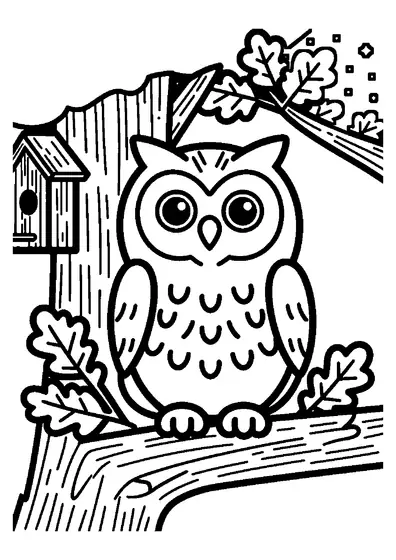
This illustration captures a long-eared owl with prominent feather tufts perching on an oak branch next to a lantern in a nocturnal forest.

A4 format (portrait), black outlines on a white background · for home and classroom use
All coloring pages: Bird Coloring Pages
Similar coloring pages: Bird Coloring Pages


What else can you print? Free, no account needed
Custom Name Coloring Pages
Enter your child's name to generate a custom coloring page featuring large outline letters to color and decorate.
Open generator →Connect the Dots Generator
Eight connect-the-dots pictures across three difficulty levels. Features faint outline guides for younger children and dots only for older kids.
Open generator →Printables
Worksheets, tracing lines, mazes and dot-to-dots in A4.
Browse printables →
Long-Eared Owl in a Night Forest
The scene portrays a wide-eyed long-eared owl perched on a thick oak branch within a dense nighttime woodland. Beside the owl stands an illuminated lantern. The nocturnal backdrop reflects the quiet environment of mature oak forests where predatory birds keep watch from elevated perches during the night.
Nocturnal Habits of Long-Eared Owls
Despite their name, the long feather tufts on top of a long-eared owl's head are not actual ears, but specialized feather clusters used for display and camouflage. These birds rely on exceptional facial disc feathers that funnel subtle sound waves directly into their hidden ear openings. During winter, long-eared owls often roost together in communal groups hidden inside dense evergreen or oak foliage.
Real-Life Colors of Owls and Oak Woods
- Long-eared owl plumage: Buff-brown, cream, and dark brown mottled patterns
- Owl eyes: Bright yellow to orange iris with black pupils
- Oak tree bark: Deep gray-brown with rugged vertical furrows
- Oak leaves: Dark forest green in summer or rust-brown in autumn
- Vintage lantern casing: Weathered brass, black iron, or dark bronze