
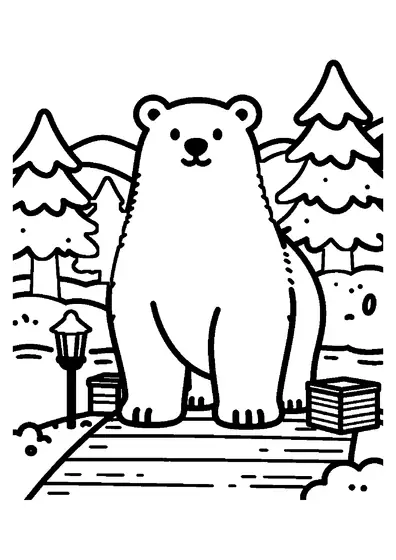
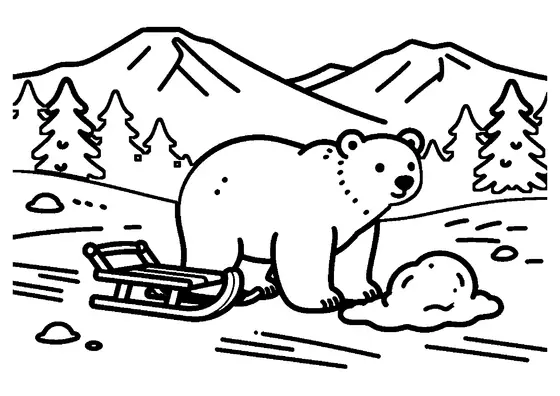
Polar Bear on an Icy Path
A majestic arctic predator walks steadily along a frozen trail surrounded by snow and ice.

A4 format (landscape), black outlines on a white background · for home and classroom use
All coloring pages: Bear Coloring Pages
Similar coloring pages: Bear Coloring Pages



What else can you print? Free, no account needed
Custom Name Coloring Pages
Enter your child's name to generate a custom coloring page featuring large outline letters to color and decorate.
Open generator →Connect the Dots Generator
Eight connect-the-dots pictures across three difficulty levels. Features faint outline guides for younger children and dots only for older kids.
Open generator →Printables
Worksheets, tracing lines, mazes and dot-to-dots in A4.
Browse printables →
Polar Bear on an Icy Path
This polar scene portrays a large arctic bear journeying along a snow-covered path across a frozen northern landscape. Massive ice formations and deep snow drifts define the habitat surrounding the polar bear as it moves along its icy trail.
Adaptations of Polar Bears for Arctic Survival
Polar bears are perfectly adapted to life in the freezing Arctic Circle, boasting two layers of dense fur and a thick blubber layer up to four inches deep for insulation. Interestingly, a polar bear's fur is not actually white; each guard hair is hollow and transparent, reflecting sunlight to appear white against the snow. Their large paws feature bumpy pads that provide exceptional traction when walking across slippery sea ice.
Real Colors of the Arctic Environment
- Polar bear coat: off-white, pale cream, or light yellowish ivory
- Nose and skin beneath fur: jet black
- Icy path and snowdrifts: pure white with pale blue or turquoise shadows
- Arctic sky: crisp ice blue, soft violet, or stormy gray