
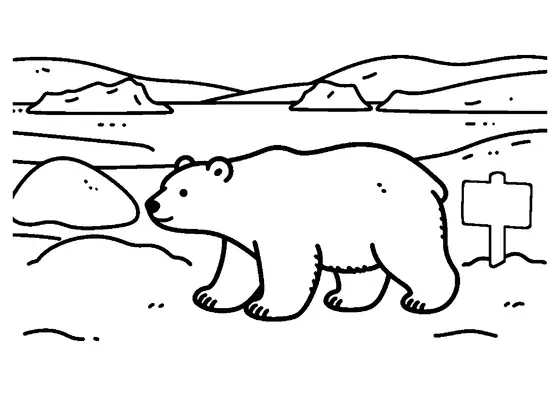
Polar Bear on a Snowy Rock Ledge
An Arctic scene showcases a polar bear surveying a freezing tundra landscape from a high snow-covered outcrop.

A4 format (portrait), black outlines on a white background · for home and classroom use
All coloring pages: Bear Coloring Pages
Similar coloring pages: Bear Coloring Pages



What else can you print? Free, no account needed
Custom Name Coloring Pages
Enter your child's name to generate a custom coloring page featuring large outline letters to color and decorate.
Open generator →Connect the Dots Generator
Eight connect-the-dots pictures across three difficulty levels. Features faint outline guides for younger children and dots only for older kids.
Open generator →Printables
Worksheets, tracing lines, mazes and dot-to-dots in A4.
Browse printables →
Polar Bear on an Arctic Overlook
A polar bear stands on a snowy rock ledge overlooking an expanse of ice and snow. Nearby, a frozen waterfall stands completely solid in the subzero temperatures, capturing the quiet stillness of the polar environment.
Adaptations for Subzero Arctic Life
Polar bears possess dense coats made of hollow, translucent hair shafts that reflect light and trap warm air against their body. Beneath their thick black skin lies a layer of blubber up to four inches deep, which insulates them against freezing winds and icy ocean waters.
True Colors of the Arctic Wilderness
- Polar bear fur: White to off-white cream or yellowish ivory
- Polar bear nose and skin: Solid black
- Frozen waterfall ice: Pale cyan, light sky blue, or translucent white
- Exposed rock ledge: Dark slate gray, charcoal, or basalt black
- Surrounding snow cover: Bright polar white with soft blue shadows