
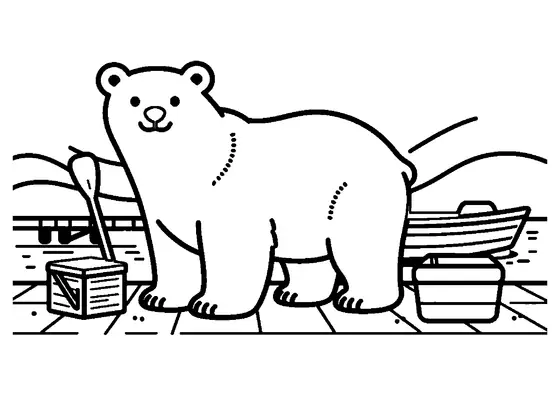
Polar Bear by an Arctic Research Station
An Arctic landscape setting showcases a polar bear roaming near scientific polar equipment and ice formations.

A4 format (landscape), black outlines on a white background · for home and classroom use
All coloring pages: Bear Coloring Pages
Similar coloring pages: Bear Coloring Pages


What else can you print? Free, no account needed
Custom Name Coloring Pages
Enter your child's name to generate a custom coloring page featuring large outline letters to color and decorate.
Open generator →Connect the Dots Generator
Eight connect-the-dots pictures across three difficulty levels. Features faint outline guides for younger children and dots only for older kids.
Open generator →Printables
Worksheets, tracing lines, mazes and dot-to-dots in A4.
Browse printables →
Polar Bear in the Frozen Arctic Environment
A solitary polar bear moves through an icy landscape near an Arctic research station surrounded by massive icebergs. The scene combines northern wildlife with modern polar exploration buildings set against frozen waters.
Scientific Exploration in Extreme Polar Conditions
Arctic research stations host meteorologists, biologists, and climate scientists who study polar weather patterns and marine mammals throughout the year. Facilities are built on elevated stilts or insulated foundations to prevent heat from melting the underlying permafrost. Researchers maintain a safe distance from native wildlife to protect both humans and Arctic animals.
Natural Colors of the Arctic Ecosystem
- Polar bear fur: translucent white or cream-colored strands that reflect light and appear white against snow
- Icebergs: light blue, cyan, or crisp white depending on ice density and sunlight reflection
- Research station exterior: bright red, orange, or yellow weather-resistant panels used for high visibility in blizzards
- Arctic ground ice: pale gray, soft blue, or white snow cover