
Tram Turning on Curved Tracks
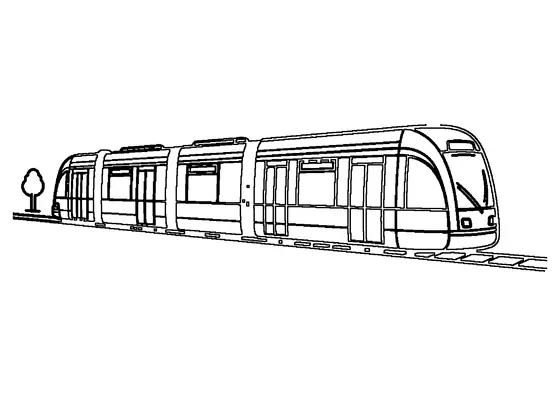
An urban tram navigates a curved street track beneath two soft clouds with visible side passenger doors and large glass windows.

A4 format (portrait), black outlines on a white background · for home and classroom use
All coloring pages: Train Coloring Pages
Similar coloring pages: Train Coloring Pages


What else can you print? Free, no account needed
Custom Name Coloring Pages
Enter your child's name to generate a custom coloring page featuring large outline letters to color and decorate.
Open generator →Connect the Dots Generator
Eight connect-the-dots pictures across three difficulty levels. Features faint outline guides for younger children and dots only for older kids.
Open generator →Printables
Worksheets, tracing lines, mazes and dot-to-dots in A4.
Browse printables →
City Tram Navigating a Curved Track
A public transit tram rounds a curve along embedded steel rails, displaying its front windshield, passenger doors, headlights, and side windows. Two clouds hang in the sky above the moving vehicle.
How Trams Share Urban Streets
Trams, also known as streetcars or trolleys, operate on rails embedded directly into public city roadways. Their metal wheels feature narrow flanges that fit inside grooved rail slots, allowing cars and buses to drive smoothly across the track area. Because trams run on dedicated urban tracks, they help reduce traffic congestion in dense downtown centers.
Real World Colors of City Trams
- Main tram body: bright yellow, crimson red, white, or sky blue
- Passenger doors: silver gray, yellow, or dark blue
- Glass windows: light ice blue or clear gray
- Headlights and markers: bright yellow or warm white
- Clouds: light gray and white