
Train on the Heather Trail
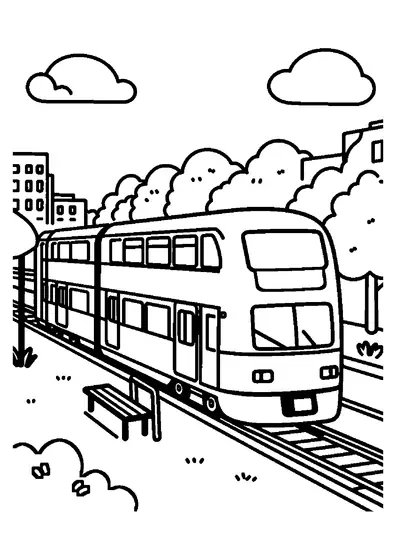
A long passenger train traverses open heathland near stacked travel trunks, a vintage signal lantern, and rocky hillside vegetation.

A4 format (portrait), black outlines on a white background · for home and classroom use
All coloring pages: Train Coloring Pages
Similar coloring pages: Train Coloring Pages




What else can you print? Free, no account needed
Custom Name Coloring Pages
Enter your child's name to generate a custom coloring page featuring large outline letters to color and decorate.
Open generator →Connect the Dots Generator
Eight connect-the-dots pictures across three difficulty levels. Features faint outline guides for younger children and dots only for older kids.
Open generator →Printables
Worksheets, tracing lines, mazes and dot-to-dots in A4.
Browse printables →
Moorland Railway Route Across Wild Heather Fields
Moorland tracks cross open, uncultivated countryside where low shrubs and granite outcrops dominate the landscape. Shown from a side angle, a passenger train with multiple cars travels past heathland tufts, natural rocks, rolling hills, stacked travel trunks, and a large iron railway lantern positioned near the line.
Unique Ecosystems and Historic Signal Lights on Heathland
Heathlands and moorlands are open landscapes characterized by acidic, nutrient-poor soil where low-growing heather shrubs flourish. Railway lanterns were vital safety devices before electrical signals, using kerosene lamps behind colored glass lenses to display warnings to train drivers across fog-covered plains. Sturdy leather and wood travel trunks were built to endure rough handling in open luggage cars.
True Colors of Heathland Plants and Railway Gear
- Flowering heather shrubs: Purple, magenta, or pale pink blossoms
- Railway signal lantern: Cast iron black with red or green glass
- Vintage travel trunks: Dark brown leather with brass metal corner caps
- Moorland soil and rocks: Dark peat brown soil with light gray granite
- Train car body: Crimson red, dark green, or blue paint