
Small Locomotive on the Railway Tracks
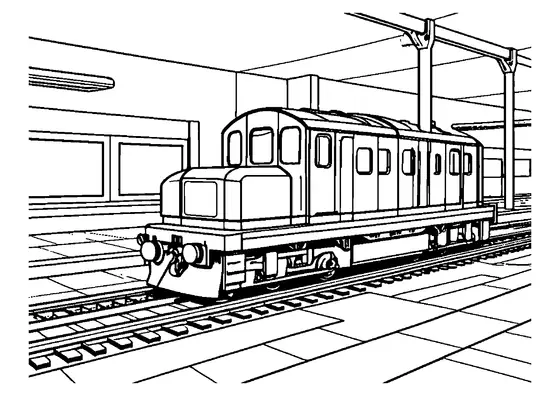
A small four-wheeled switching locomotive stands on railway tracks in front of a low platform fence.

A4 format (landscape), black outlines on a white background · for home and classroom use
All coloring pages: Train Coloring Pages
Similar coloring pages: Train Coloring Pages



What else can you print? Free, no account needed
Custom Name Coloring Pages
Enter your child's name to generate a custom coloring page featuring large outline letters to color and decorate.
Open generator →Connect the Dots Generator
Eight connect-the-dots pictures across three difficulty levels. Features faint outline guides for younger children and dots only for older kids.
Open generator →Printables
Worksheets, tracing lines, mazes and dot-to-dots in A4.
Browse printables →
A Small Locomotive on the Tracks
The compact switching locomotive has an engine hood at the front and a raised cab at the rear. An exhaust stack rises above the engine compartment, while three window sections provide views from the cab. Four rail wheels support the vehicle, and a simple low fence runs behind the track.
Work Done by Switching Locomotives
A switching locomotive moves railcars over short distances in rail yards, stations, or industrial areas. Its job may include assembling cars into a train or placing an individual car beside a loading area. A cab with windows facing several directions helps the operator watch the track during careful, low-speed movements.
Realistic Colors for a Small Locomotive
- Locomotive body: yellow, orange, red, blue, green, or black
- Cab windows: pale blue, blue-gray, or dark gray from reflected light
- Exhaust stack: black, charcoal gray, or dark metal
- Wheels and lower frame: black or dark steel gray
- Platform fence: brown if wooden, or gray if made from metal