
Shunting Locomotive on Railway Tracks
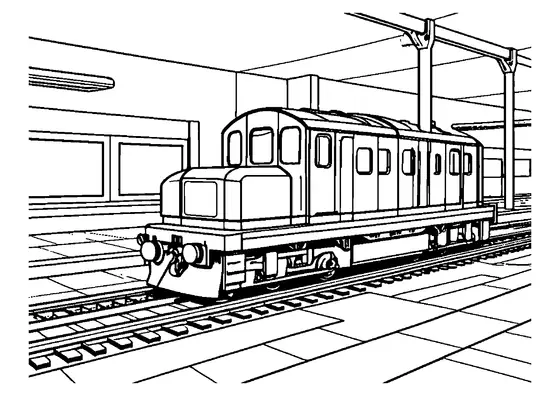
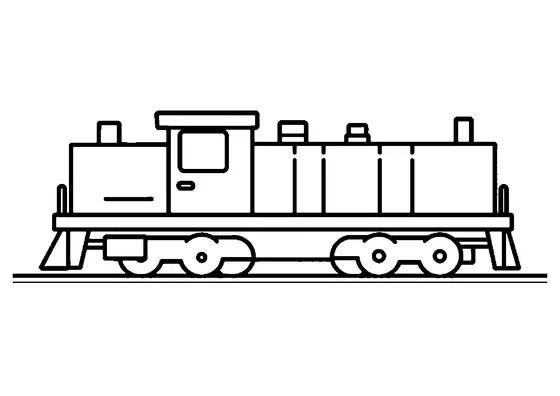
Viewed from above at an angle, a single diesel shunting locomotive stands on diagonal railway tracks.

A4 format (landscape), black outlines on a white background · for home and classroom use
All coloring pages: Train Coloring Pages
Similar coloring pages: Train Coloring Pages




What else can you print? Free, no account needed
Custom Name Coloring Pages
Enter your child's name to generate a custom coloring page featuring large outline letters to color and decorate.
Open generator →Connect the Dots Generator
Eight connect-the-dots pictures across three difficulty levels. Features faint outline guides for younger children and dots only for older kids.
Open generator →Printables
Worksheets, tracing lines, mazes and dot-to-dots in A4.
Browse printables →
A Shunting Engine Ready for Yard Work
The large locomotive occupies the scene by itself, with its long engine hood, cab, side panels, wheels, and undercarriage visible from an elevated viewpoint. Beneath it, the rails and their supporting ties run diagonally toward the left, right, and lower edges. No buildings, workers, cars, or other trains surround the engine.
The Special Job of a Shunting Locomotive
Shunting locomotives move railcars within yards, terminals, and industrial sidings rather than hauling them on long journeys. They can assemble cars into a train, separate arriving cars, or place individual cars beside loading areas. Good low-speed control is especially useful when cars must be coupled carefully.
Colors Seen on Real Shunting Locomotives
- Locomotive body: yellow, orange, red, blue, green, or dark gray, depending on its operator
- Cab windows: smoky gray, blue-gray, or nearly black
- Handrails and safety areas: often bright yellow or white for visibility
- Wheels and undercarriage: dark steel gray, brown-black, or rusty brown
- Rails and ties: steel gray rails with brown wooden or gray concrete ties