
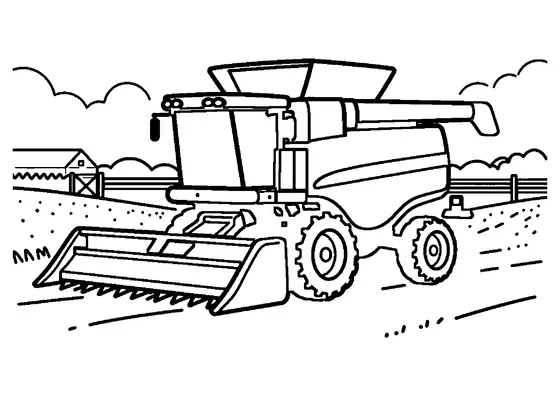
Combine Harvester in a River Valley Barley Field
Seen from the front, a combine harvester gathers ripe barley on farmland in a river valley.

A4 format (portrait), black outlines on a white background · for home and classroom use
All coloring pages: Combine Harvester Coloring Pages
Similar coloring pages: Combine Harvester Coloring Pages



What else can you print? Free, no account needed
Custom Name Coloring Pages
Enter your child's name to generate a custom coloring page featuring large outline letters to color and decorate.
Open generator →Connect the Dots Generator
Eight connect-the-dots pictures across three difficulty levels. Features faint outline guides for younger children and dots only for older kids.
Open generator →Printables
Worksheets, tracing lines, mazes and dot-to-dots in A4.
Browse printables →
A Barley Harvest in the River Valley
The combine harvester is working among mature barley, with the surrounding valley landscape setting the scene. Its broad front section gathers the crop as the machine moves through the field, while the nearby river and valley connect the harvest to a distinctive farming environment.
How Harvesting Works in a Valley
River valleys often contain fertile soil because flowing water has shaped and enriched the land over long periods. Barley is harvested when its stalks and grain heads have dried, and a combine performs several jobs at once: it cuts the plants, separates the grain, and collects it inside the machine.
Natural Colors of the Harvester, Barley, and Valley
- Combine harvester body: commonly green, red, yellow, or dark gray, depending on the manufacturer
- Tires: black rubber with dark gray wheel hubs
- Ripe barley heads and stalks: warm golden yellow, tan, or pale brown
- River water: blue-green, brownish green, or steel blue, depending on the sky and sediment
- Valley ground: earthy brown beneath crops, with green vegetation in uncultivated areas