
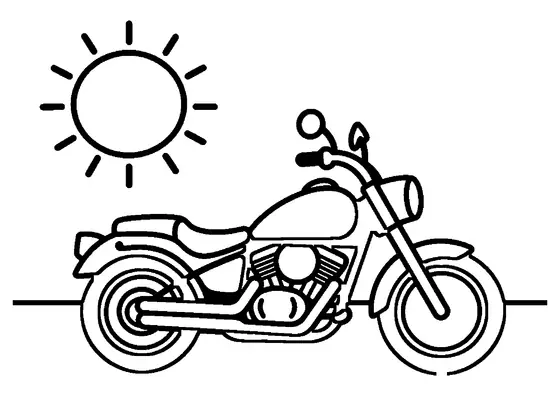
Bobber Motorcycle Under the Sun
This classic bobber motorcycle with a thick rear tire sits outdoors beneath a large sun.

A4 format (landscape), black outlines on a white background · for home and classroom use
All coloring pages: Motorcycle Coloring Pages
Similar coloring pages: Motorcycle Coloring Pages


What else can you print? Free, no account needed
Custom Name Coloring Pages
Enter your child's name to generate a custom coloring page featuring large outline letters to color and decorate.
Open generator →Connect the Dots Generator
Eight connect-the-dots pictures across three difficulty levels. Features faint outline guides for younger children and dots only for older kids.
Open generator →Printables
Worksheets, tracing lines, mazes and dot-to-dots in A4.
Browse printables →
Bobber Motorcycle on a Sunny Day
A side view highlights a classic bobber motorcycle positioned outdoors under a large sun. The custom vehicle showcases its prominent thick rear tire as it rests in the bright sunlight.
The History of Custom Bobber Bikes
Bobber motorcycles originated when motorcycle enthusiasts stripped away unnecessary bodywork and shortened fenders to reduce weight and increase speed. The thick rear tire provides solid traction and a distinctive low profile. These custom bikes remain popular for their minimalist design and clean structural appearance.
Real Colors of a Custom Bobber Motorcycle
- Fuel tank and frame: glossy black, dark maroon, or navy blue
- Thick rear tire and front wheel: charcoal black rubber
- Engine block and exhaust pipes: polished chrome or matte black
- Sun in the bright sky: warm yellow or vibrant gold