
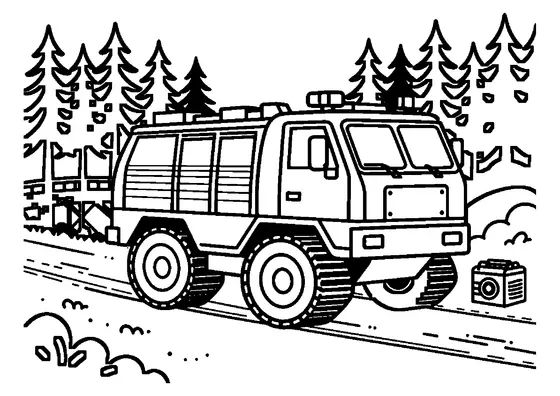
Tracked Firefighting Vehicle in Wetlands
A specialized tracked rescue vehicle maneuvers near tall reeds and a wooden bridge in a marshy wetland environment.

A4 format (landscape), black outlines on a white background · for home and classroom use
All coloring pages: Firefighter and Police Coloring Pages
Similar coloring pages: Firefighter and Police Coloring Pages



What else can you print? Free, no account needed
Custom Name Coloring Pages
Enter your child's name to generate a custom coloring page featuring large outline letters to color and decorate.
Open generator →Connect the Dots Generator
Eight connect-the-dots pictures across three difficulty levels. Features faint outline guides for younger children and dots only for older kids.
Open generator →Printables
Worksheets, tracing lines, mazes and dot-to-dots in A4.
Browse printables →
Tracked Emergency Vehicles in Marshlands
Tracked amphibious firefighting vehicles are built to navigate deep mud, soft soil, and shallow waters in wetland reserves. Their wide continuous tracks distribute vehicle weight evenly, preventing the heavy rescue apparatus from sinking into soft ground near wooden bridges and reed beds.
Navigating Difficult Wetland Terrain
Unlike wheeled vehicles, tracked rescue units exert very low ground pressure, allowing them to glide over boggy terrain that would trap standard trucks. These rugged machines transport fire crews and specialized pumps directly into remote marsh habitats during wildfire emergencies.
True Colors of Wetland Firefighting Vehicles
- Vehicle body: Safety yellow, bright red, or forest camouflage green
- Continuous rubber tracks and wheels: Matte black or dark slate gray
- Wooden bridge planks: Weathered brown, tan, or gray-brown wood tones
- Wetland reeds and grasses: Olive green, golden tan, or brownish green
- Marsh mud and water: Dark brown, muddy olive, or murky gray-blue