
Rally Sedan Under the Aqueduct
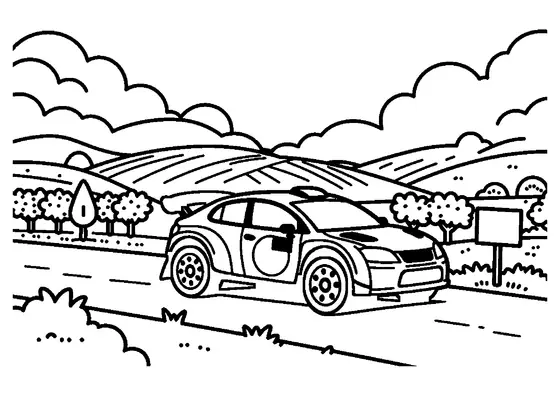
A broad competition car negotiates a curved path below an ancient stone arch structure surrounded by tall cypress trees.

A4 format (portrait), black outlines on a white background · for home and classroom use
All coloring pages: Sports Car Coloring Pages
Similar coloring pages: Sports Car Coloring Pages




What else can you print? Free, no account needed
Custom Name Coloring Pages
Enter your child's name to generate a custom coloring page featuring large outline letters to color and decorate.
Open generator →Connect the Dots Generator
Eight connect-the-dots pictures across three difficulty levels. Features faint outline guides for younger children and dots only for older kids.
Open generator →Printables
Worksheets, tracing lines, mazes and dot-to-dots in A4.
Browse printables →
High-Performance Sedan Navigating a Historic Aqueduct Course
A large four-door rally sedan moves along a smooth curve beneath the soaring arches of a traditional stone aqueduct. Conical traffic markers outline the perimeter of the road, while slender cypress trees rise in the background to form a scenic Mediterranean backdrop.
Ancient Aqueducts and Cypress Trees
Stone aqueducts were constructed centuries ago by ancient engineers to transport freshwater across long valleys using gravity alone. Cypress trees are classic evergreen plants known for their tall, columnar growth habit and resistance to drought conditions. Modern road courses occasionally wind past these enduring monuments, blending historical architecture with contemporary automotive engineering.
Natural Colors of an Aqueduct Scene
- Stone aqueduct arches: Weathered gray or warm beige limestone
- Cypress tree foliage: Dark evergreen hue
- Traffic cones: Fluorescent orange with silver stripes
- Sedan tires: Black rubber with metallic aluminum rims