
Off-Road Van by a Limestone Cave
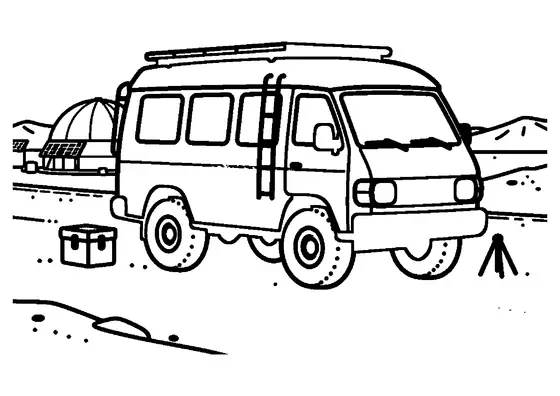
An expedition vehicle rests near a limestone cave entry alongside research equipment in a rugged landscape setting.

A4 format (landscape), black outlines on a white background · for home and classroom use
All coloring pages: Off-Road Vehicle Coloring Pages
Similar coloring pages: Off-Road Vehicle Coloring Pages


What else can you print? Free, no account needed
Custom Name Coloring Pages
Enter your child's name to generate a custom coloring page featuring large outline letters to color and decorate.
Open generator →Connect the Dots Generator
Eight connect-the-dots pictures across three difficulty levels. Features faint outline guides for younger children and dots only for older kids.
Open generator →Printables
Worksheets, tracing lines, mazes and dot-to-dots in A4.
Browse printables →
Expedition Vans in Cave Environments
Expedition vans carry gear and scientific tools directly to remote terrain such as natural cave openings. These rugged vehicles provide shelter and transport supplies needed when exploring rock formations and setting up camp stations nearby.
Limestone Cave Exploration Facts
Limestone caves form over thousands of years as rainwater slowly dissolves soft carbonate rock underground. Researchers often use four-wheel-drive vehicles to haul fragile measurement equipment over uneven ground to reach these cavern entrances.
Natural Colors of Cave Expeditions
- Off-road vehicle body: Bright yellow, metallic silver, or white
- Limestone rock face: Pale gray, tan, or off-white
- Expedition gear crates: Dark green or industrial orange
- Dirt terrain: Brown, reddish tan, or sandy beige