
Car on a Road with Puddles
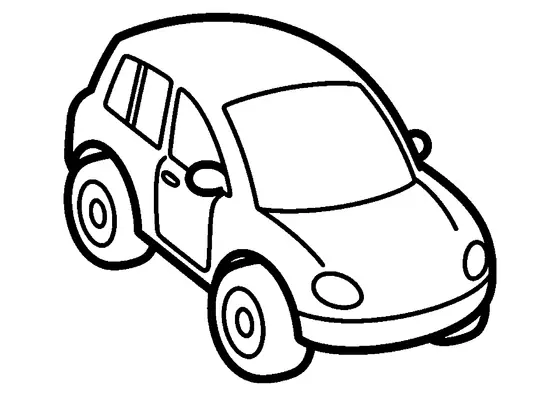
A hatchback is shown from the side on a puddled road, with hills and the distant horizon forming the landscape behind it.

A4 format (landscape), black outlines on a white background · for home and classroom use
All coloring pages: Car Coloring Pages
Similar coloring pages: Car Coloring Pages




What else can you print? Free, no account needed
Custom Name Coloring Pages
Enter your child's name to generate a custom coloring page featuring large outline letters to color and decorate.
Open generator →Connect the Dots Generator
Eight connect-the-dots pictures across three difficulty levels. Features faint outline guides for younger children and dots only for older kids.
Open generator →Printables
Worksheets, tracing lines, mazes and dot-to-dots in A4.
Browse printables →
What the Car on the Road Shows
The passenger car appears in a complete side view, making its roof, doors, windows, wheels, and compact hatchback body visible. It travels or stands on a road dotted with round puddles. Beyond the road, the shapes of hills meet a low horizon, placing the vehicle in an open mountain landscape.
Interesting Facts About Hatchbacks and Wet Roads
A hatchback has a rear door that lifts upward and opens into the passenger area, making the cargo space easy to reach. Puddles form where rainwater collects in low places, and drivers usually slow down because water can reduce a tire's grip on the road.
Real-Life Colors of the Roadside Scene
- Hatchback body: may be red, blue, white, black, silver, or almost any other color
- Windows: transparent with blue-gray, green-gray, or dark reflections
- Tires: black with dark gray wheel centers
- Road: usually charcoal, gray, or brownish gray
- Puddles and distant hills: puddles often reflect blue or gray skies, while hills may be green, brown, or rocky gray