
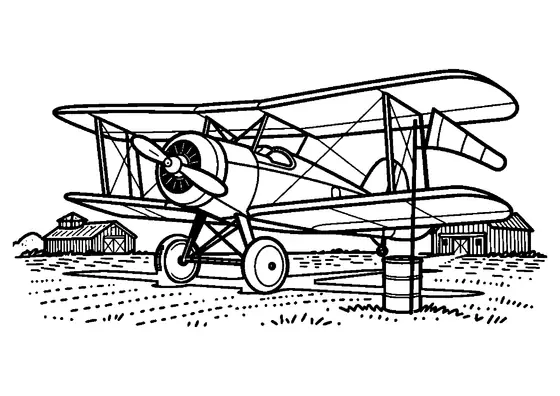
Retro Biplane Beside a Windsock
A classic propeller biplane rests on an open grass airfield near a fabric windsock and a small flying club building.

A4 format (landscape), black outlines on a white background · for home and classroom use
All coloring pages: Airplane Coloring Pages
Similar coloring pages: Airplane Coloring Pages



What else can you print? Free, no account needed
Custom Name Coloring Pages
Enter your child's name to generate a custom coloring page featuring large outline letters to color and decorate.
Open generator →Connect the Dots Generator
Eight connect-the-dots pictures across three difficulty levels. Features faint outline guides for younger children and dots only for older kids.
Open generator →Printables
Worksheets, tracing lines, mazes and dot-to-dots in A4.
Browse printables →
Vintage Biplanes on Historic Grass Airfields
Biplanes feature two sets of wings mounted one above the other, an iconic design from the early decades of aviation history. Parking on grassy airfields matches the historical tradition of early airfields, which lacked paved runways. Nearby, a conical fabric windsock swivels on a pole to indicate wind direction and speed to approaching pilots, while the flying club house serves as a meeting place.
How Windsocks Assist Vintage Aircraft Pilots
Vintage aircraft often lack digital weather telemetry, making physical tools like windsocks essential for safe landings. A windsock catches breezes and inflates, pointing directly away from the direction the wind is blowing. By observing how fully the cloth tube inflates, biplane pilots instantly estimate wind velocity and choose the best approach angle into the wind.
Colors of Retro Biplanes and Airfield Equipment
- Biplane wings and fuselage: classic deep red, bright yellow, cream white, or vintage navy blue
- Propeller: warm wood grain brown with brass leading edges or matte black steel
- Fabric windsock: bright safety orange, vivid red, or alternating red-and-white stripes
- Grass airfield: natural meadow green, soft clover, or golden dry grass
- Flying club building: rustic wooden brown, white siding, or red painted walls with gray roof trim