
Propeller Plane Flying Over a Forest
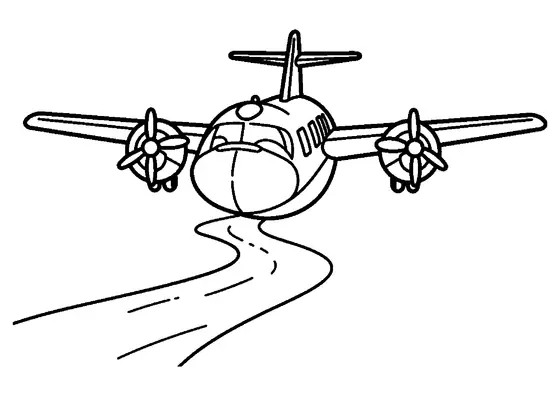
A playful twin-engine airplane glides low in the air right above the soft rounded treetops of a forest.

A4 format (landscape), black outlines on a white background · for home and classroom use
All coloring pages: Airplane Coloring Pages
Similar coloring pages: Airplane Coloring Pages



What else can you print? Free, no account needed
Custom Name Coloring Pages
Enter your child's name to generate a custom coloring page featuring large outline letters to color and decorate.
Open generator →Connect the Dots Generator
Eight connect-the-dots pictures across three difficulty levels. Features faint outline guides for younger children and dots only for older kids.
Open generator →Printables
Worksheets, tracing lines, mazes and dot-to-dots in A4.
Browse printables →
Twin-Engine Airplane Soaring Over Forest Treetops
This aerial view depicts a cartoon airplane equipped with an oversized rounded front nose and twin propellers mounted on its wings. The aircraft is shown gliding smoothly through the sky, positioned directly over a series of cloud-like tree canopies positioned across the lower portion of the scene.
How Propeller Aircraft Fly Low Over Land
Twin-engine propeller planes are frequently chosen for low-altitude utility tasks such as forest fire monitoring, aerial surveying, and wildlife conservation tracking. Their twin engines offer high maneuverability at lower airspeeds, allowing pilots to navigate safely just above rugged wilderness areas.
Typical Colors of Utility Aircraft
- Main airplane fuselage: bright yellow, white, or rescue orange
- Nose cone: contrasting black, dark gray, or red accent colors
- Propeller blades: black or dark gray with high-visibility yellow tip stripes
- Forest tree canopy: emerald green, olive green, or deep forest green