
Passenger Airplane Flying Above the Clouds
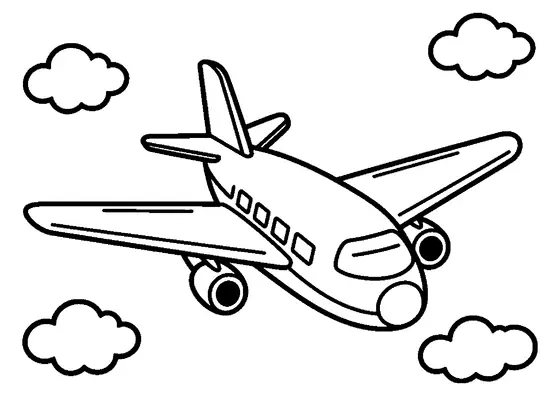
A commercial jetliner displays its fuselage, wings, engines, and extended landing gear above a thick cloud deck.

A4 format (landscape), black outlines on a white background · for home and classroom use
All coloring pages: Airplane Coloring Pages
Similar coloring pages: Airplane Coloring Pages




What else can you print? Free, no account needed
Custom Name Coloring Pages
Enter your child's name to generate a custom coloring page featuring large outline letters to color and decorate.
Open generator →Connect the Dots Generator
Eight connect-the-dots pictures across three difficulty levels. Features faint outline guides for younger children and dots only for older kids.
Open generator →Printables
Worksheets, tracing lines, mazes and dot-to-dots in A4.
Browse printables →
Commercial Jetliner Flying in Upper Atmosphere
A large passenger aircraft glides over a dense formation of cumulus clouds drifting across the sky. The plane shows its twin jet engines beneath the main wings along with exposed landing gear extending underneath the main body.
Landing Gear and Jet Engines
Modern passenger airliners deploy landing gear wheels when preparing to land or shortly after takeoff, though wheels remain retracted during high-altitude cruise flight. Jet engines intake large amounts of air, mix it with aviation fuel, and produce powerful thrust.
Colors of Commercial Aircraft and Clouds
- Jet aircraft body: bright white or polished aluminum
- Engine nacelles: dark gray or metallic silver
- Aircraft tires: dark rubber gray
- Fluffy clouds: bright white with soft gray shading
- High sky backdrop: light blue